What Is 7-OH?
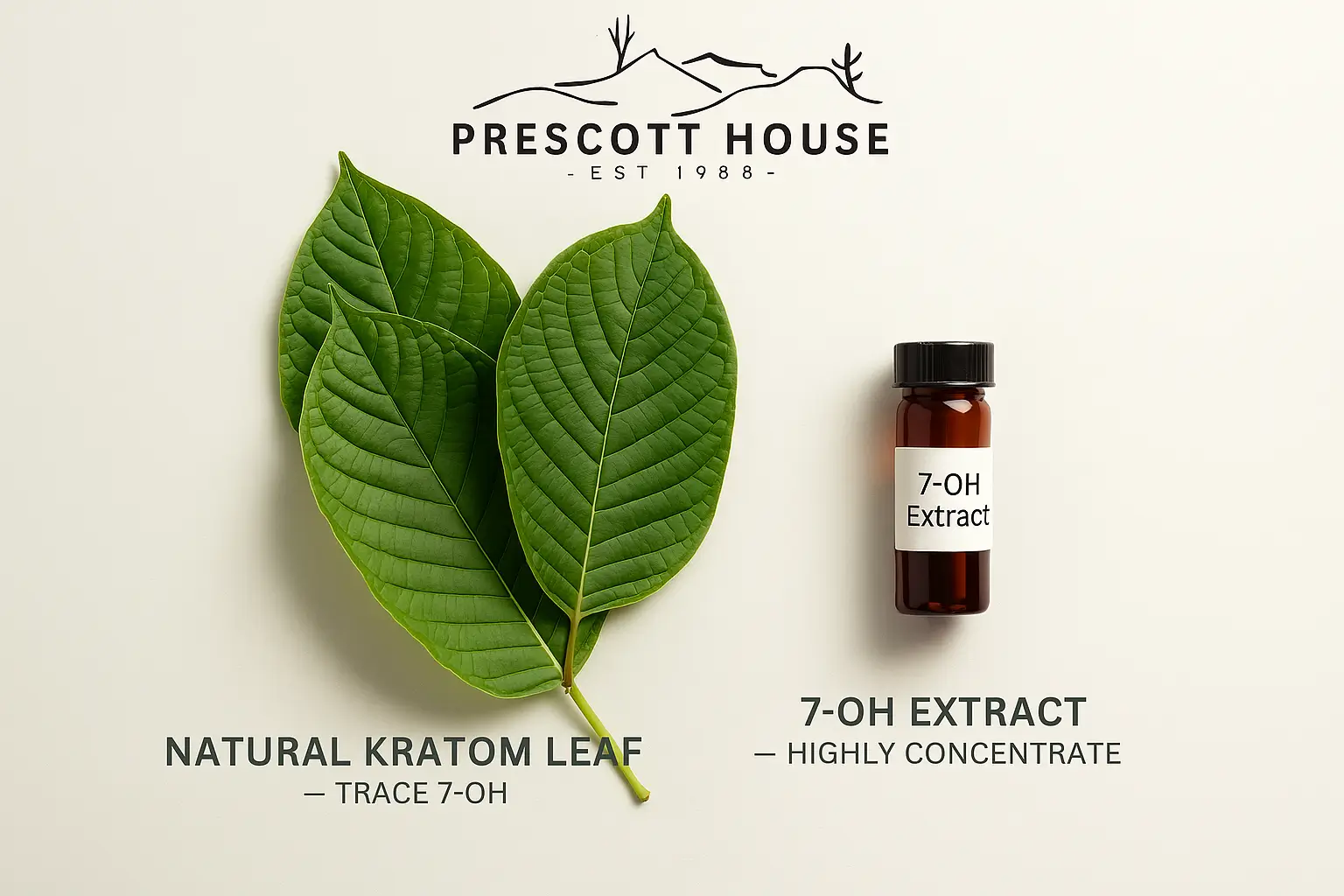
7-OH stands for 7-hydroxymitragynine, a chemical compound derived from the kratom plant. Kratom (scientific name Mitragyna speciosa) is an herbal tree from Southeast Asia, and its leaves contain natural alkaloids that affect the body. Mitragynine is the primary alkaloid in kratom, making up about 1% (or more) of the dried leaves, while 7-OH is normally only present in trace amounts (often far less than 0.1% of the leaf)news.cuanschutz.edumedscape.com. In other words, 7-OH is a naturally occurring but very minor component of kratom leaves.
Because the plant itself contains so little 7-OH, manufacturers have begun creating 7-OH in labs. They typically start with mitragynine extracted from kratom and chemically add a hydroxyl group at the 7th position to produce 7-OH – a process known as semi-synthesisnews.cuanschutz.edu. The result is a concentrated form of the compound that can be added to products. 7-OH products are often marketed as “enhanced” kratom or under names like 7-OH, 7-hydro, or even “legal morphine,” because of its powerful opioid-like effectsmedscape.com.
How Is 7-OH Different from Kratom?
In natural kratom powder or tea, the levels of 7-OH are extremely low (typically well under 0.1-0.2%). This means when someone consumes plain kratom leaf, they are mostly ingesting mitragynine and only a tiny bit of 7-OHdshs.texas.gov. 7-OH products, however, contain far higher concentrations. Some semi-synthetic or synthetic 7-OH extracts have been found to be up to 98% pure 7-OHdshs.texas.gov. In independent lab tests, certain so-called “kratom extract” pills were found to be over 40% 7-OH by content, even though their labels were misleadingmedscape.com.
Potency: 7-OH is significantly more potent than regular kratom’s main ingredient. Experts estimate that 7-OH is 5 to 50 times more potent in activating opioid receptors than ordinary kratom powdernews.cuanschutz.edu. In studies, 7-OH has shown about 13 times the potency of morphine (a powerful opioid painkiller) in its effectdshs.texas.gov. By contrast, mitragynine itself has mixed stimulant and opioid properties and is much weaker. This means a small amount of pure 7-OH can have a much stronger effect than a large dose of plain kratom. As one pharmacologist explains, “when you compare mitragynine to 7-OH, 7-OH is always more potent”news.cuanschutz.edu. This higher potency greatly increases the risk of misuse and accidental overdose.
Semi-synthetic creation: Because it’s not practical to harvest enough 7-OH directly from kratom leaves, companies create it in the lab from mitragyninenews.cuanschutz.edu. This makes 7-OH a semi-synthetic opioid compound – it starts from a natural source (kratom) but is chemically modified to yield a far stronger substance. Natural kratom powder has a kind of built-in limiting factor: the bitter taste and bulk of consuming many grams of leaf make it hard to take extremely high dosesnews.cuanschutz.edunews.cuanschutz.edu. 7-OH products remove that barrier by concentrating the active compound into a tiny volume (for example, a small pill or a shot-sized drink)news.cuanschutz.edu. In short, 7-OH is to kratom what a distilled liquor is to a low-alcohol beer – a much more concentrated form that can deliver a stronger punch quicklynews.cuanschutz.edu.
Why Is 7-OH Considered Dangerous?
7-OH has alarmed health experts and regulators because of its high potency and opioid-like effects. It binds to the same opioid receptors in the brain that drugs like morphine, oxycodone, or heroin dofda.govcbsnews.com. In fact, the U.S. Food and Drug Administration (FDA) has warned that 7-OH “is an opioid” – not just “like” an opioid – and may signal a “fourth wave of the opioid epidemic.”cbsnews.com It can produce intense pain relief and euphoria, but also sedation and respiratory depression (slowed breathing), especially at higher dosesmedscape.com. Because it is so strong, the likelihood of abuse and addiction is much higher than with traditional kratomnews.cuanschutz.edumedscape.com.
Higher risk of overdose: With 7-OH products, it’s easy to accidentally take a dangerous dose. Many of these items are poorly labeled or marketed in misleading ways. For example, they might be sold as “plant tonic” or “alkaloid extract” without clearly stating how much 7-OH they containcbsnews.com. A person might think they are using a mild herbal remedy, when in reality they are ingesting a concentrated opioid-like substance. Tragically, there have been fatal overdoses linked to 7-OH. In Los Angeles County, officials reported that 7-OH was involved in three overdose deaths in mid-2025 among otherwise healthy 18- to 40-year-oldscbsnews.com. In each of those cases, the individuals had also been drinking alcohol, and the combination proved deadlycbsnews.comcbsnews.com. Health authorities emphasize that using high doses of 7-OH, especially together with alcohol or sedatives, can cause severe respiratory depression and deathcbsnews.com. Even on its own, an excessive amount of 7-OH can lead to someone losing consciousness and their breathing stopping – the classic opioid overdose scenariodshs.texas.govcbsnews.com.
Calls to poison centers and hospitalizations have surged as 7-OH became more available. For example, Texas saw a sharp rise in reports: in 2025 (up to late August), there were 192 poison center calls involving kratom or 7-OH – nearly double the total from the previous year. Notably, 19 of those calls were specifically about concentrated 7-OH products, and more than half of those cases (11 people) were serious enough to require treatment in a hospitaldshs.texas.gov. This shows that many users of 7-OH are experiencing severe adverse effects, underscoring its dangers.
Partial agonist but still risky: Some research suggests that kratom’s compounds (including 7-OH) are partial opioid agonists and may cause somewhat less respiratory depression compared to full opioids like fentanylnews.cuanschutz.edu. However, this does not make 7-OH “safe.” The safety margin disappears when 7-OH is taken in high concentrations or mixed with other depressant drugs. One case in Colorado illustrates this risk: a young man seeking anxiety relief took a high-strength kratom/7-OH product along with an over-the-counter antihistamine (diphenhydramine), not realizing how potent it was, and sadly died the next daynews.cuanschutz.edu. The lack of dosing information and regulation means users often don’t know they’re consuming a potentially lethal amount. Even kratom advocacy groups have voiced concern – the American Kratom Association warns that any product with over 2% 7-OH by content “is no longer kratom,” but rather an adulterated, highly potent mixturemedscape.com.
In summary, 7-OH is dangerous because it takes an unregulated herbal substance and turns it into a much stronger opioid-like drug without safeguards. The result is a product that can hook users quickly and put them at serious risk of overdose or other health harms.
How Is 7-OH Used and Sold?
7-OH products have been popping up across the country, often in places like gas stations, vape shops, head shops, and online storesfda.govcbsnews.com. They are marketed in various appealing or novel forms to attract consumers. Common forms of 7-OH offerings include:
- Pills or Tablets: Sometimes labeled as kratom capsules or extract tablets, but containing concentrated 7-OH. Brands have names like “Roxytabs” or “7OHMZ Tablets,” suggesting a high-strength productfda.gov.
- Gummies and Candies: Chewable sweet products (gummy bears, chocolate mint chews, etc.) that have 7-OH addeddshs.texas.gov. These are often fruit-flavored (e.g. mango, berry) and may be particularly attractive to younger people, which is a major concern for regulatorsfda.gov.
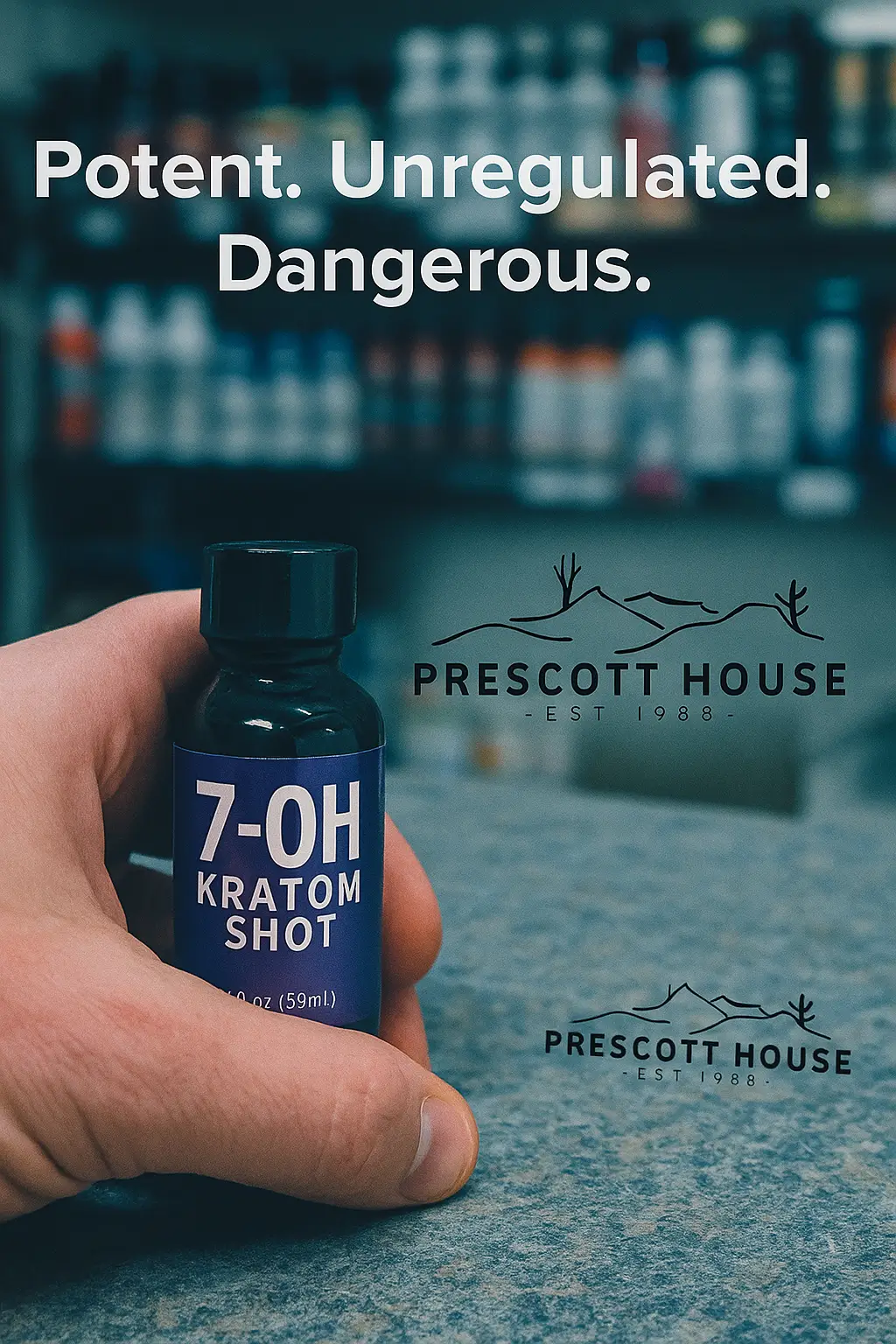
- Liquid Shots or Drinks: Small bottles or vials advertised as energy shots, relaxation drinks, or pain relief potions. These “shots” contain concentrated kratom alkaloids like 7-OH – sometimes called “enhanced kratom shots” or similar. They allow a user to drink a large dose in one quick gulp, which significantly increases risknews.cuanschutz.educbsnews.com.
- Powders and Extracts: Some products are sold as high-potency kratom powder or resin. They might be labeled “extract” or “advanced alkaloids” and can be nearly pure 7-OH in contentdshs.texas.gov.
- Novelty Edibles: There have even been reports of imitation ice cream cones infused with 7-OH extractfda.govdshs.texas.gov. These are essentially candies shaped like ice cream treats, indicating how far companies have gone to market 7-OH in creative ways.
Marketing and labeling: These products are often marketed as natural remedies for pain, anxiety, mood boost, or even to help with opioid withdrawal symptomscbsnews.com. They might use terms like “herbal supplement,” “plant alkaloids,” or “all-natural pain relief” on their packagingcbsnews.com. However, this marketing is highly misleading – 7-OH is not a benign supplement, but a potent drug. Labels may not clearly list 7-hydroxymitragynine by name, or they bury it in fine print. Some brands simply call it “kratom extract” or use code words. This lack of transparency can fool consumers into underestimating the strength. For instance, someone might take multiple gummies thinking it’s like a mild herbal candy, while in reality they are consuming a large dose of an opioid-like compound.
Appeal and easy access: Because these products have been legal to sell (until recently in some areas), they have been “hiding in plain sight.” A person can walk into a convenience store and purchase 7-OH gummies or shots as easily as buying a sodafda.govcbsnews.com. Online, a simple search might turn up vendors advertising “premium 7-OH kratom extracts” for home deliverypureleafkratom.com. The availability in ordinary retail outlets gives a false sense of security. It’s important to realize that no 7-OH product on the market has been tested or approved for safety – they are sold without any medical oversightfda.gov.
Can You Overdose on 7-OH?
Yes. Overdosing on 7-OH is a real and serious risk. As a potent opioid-like substance, 7-OH can depress the central nervous system, leading to dangerously slow breathing, unconsciousness, and even death when too much is taken. There have been confirmed overdose deaths involving 7-OH, especially when it’s combined with other depressants. In the Los Angeles cases mentioned earlier, young adults who took 7-OH (likely in an enhanced kratom product) along with alcohol suffered fatal respiratory failurecbsnews.comcbsnews.com. The alcohol compounded the sedative effect of 7-OH, illustrating how mixing substances greatly increases overdose risk.
Even without other drugs, a high dose of 7-OH alone can cause severe toxicity. The FDA has reported at least one death linked to a product containing 7-OH (a concentrated “black liquid kratom” shot) and numerous non-fatal overdoses causing issues like seizures and liver damagemedscape.com. Unlike traditional kratom leaf (which is harder to rapidly ingest to extreme levels), 7-OH extracts allow rapid intake of a large opioid dose, which can overwhelm the body’s respiratory drive.
Signs of 7-OH overdose or severe reaction may include:
- Extreme drowsiness or unresponsiveness: The person may be difficult to wake or completely unconscious.
- Slow or troubled breathing: Shallow breaths, irregular breathing, or no breathing (respiratory arrest in worst cases)dshs.texas.gov.
- Blue-tinged lips or fingertips: A sign of low oxygen levels (cyanosis) due to respiratory depression.
- Pinpoint pupils: Opioid overdoses often cause pupils to constrict heavily.
- Seizures: Convulsions have been reported in some 7-OH casesdshs.texas.gov.
- Cold, clammy skin or sweating and high heart rate: Sometimes an overdose can cause shock-like symptoms or the opposite, an adrenergic surge leading to sweating, rapid heartbeat, and high blood pressure before the person collapsesdshs.texas.gov.
If you suspect someone has overdosed on 7-OH, treat it as an emergency. Call 911 immediately. Naloxone (Narcan), an opioid overdose reversal medication, may help in a 7-OH overdose since 7-OH acts on opioid receptorsdshs.texas.gov. Health authorities advise using naloxone if available while waiting for emergency servicesdshs.texas.gov. Because 7-OH is a partial opioid agonist, naloxone might not fully reverse all effects, but it can still potentially save a life by improving breathing. Always inform medical personnel that 7-hydroxymitragynine (a kratom-derived opioid) is involved, so they know to manage it like an opioid overdose.
Important: Never assume that an “herbal” product is risk-free. As these cases show, you can overdose on 7-OH, and the outcomes can be fatal. Startlingly, the Los Angeles County medical examiner found no other drugs (besides alcohol) contributing in their 7-OH death cases – meaning 7-OH was a primary cause of death in otherwise healthy young individualscbsnews.com. This underscores how powerful and dangerous it is on its own.
What Are the Side Effects and Symptoms of 7-OH Use?
Using 7-OH, even without reaching overdose levels, can produce a range of side effects on both mind and body. Because 7-OH has dose-dependent effects, lower doses might initially cause stimulant-like feelings, whereas higher doses cause sedative and opioid-like effectscbsnews.com. Here are some common symptoms reported after using 7-OH (ranging from mild to severe):
- Nausea and Vomiting: Stomach upset is frequent, especially as opioids can trigger nauseadshs.texas.gov. Many users feel sick or vomit after taking strong 7-OH products.
- Agitation or Jitteriness: At lower doses, 7-OH (like kratom) may cause an increase in alertness or even anxiety and agitationdshs.texas.gov. The heart rate and blood pressure can rise, leading to a jittery, restless feeling in some people.
- Sweating: Opioid-like compounds often cause perspiration and body temperature fluctuationsdshs.texas.gov.
- Confusion and Dizziness: Users might feel disoriented or mentally foggydshs.texas.gov. It can become hard to concentrate or coordinate movements.
- Sedation and Lethargy: As the dose increases, 7-OH typically causes drowsiness, heavy limbs, and an urge to nod off. People may become very sleepy or even fall asleep unexpectedly (sometimes called “nodding” in opioid use).
- Respiratory Depression: Slowed breathing is a serious effect at higher dosesdshs.texas.gov. A person may start breathing shallower and less frequently, which can lead to low oxygen levels.
- Loss of Consciousness: Passing out or becoming unresponsive can occur if too much is takendshs.texas.gov. This is extremely dangerous, especially if the person is alone.
- Seizures: Although not common with pure kratom, seizures have been reported with 7-OH use, possibly related to its high potency or contaminants in illicit productsdshs.texas.gov.
- Withdrawal Symptoms (after regular use): If someone uses 7-OH frequently, their body can become dependent. They may experience opioid-like withdrawal symptoms when not using it. These can include muscle aches, irritability, insomnia, runny nose, diarrhea, and intense cravings – essentially a flu-like illness combined with anxiety, similar to prescription opioid or heroin withdrawalmedscape.commedscape.com. Neonatal withdrawal (newborn babies born to mothers who used kratom/7-OH heavily) has also been observed, with babies showing tremors, irritability, and other withdrawal signsmedscape.com.
Every individual might react a bit differently to 7-OH depending on their tolerance and what other substances they have in their system. However, the overall pattern is that 7-OH at high doses behaves like a classic opioid, with all the associated side effects. This includes the risk of addiction, described next.
Is 7-OH Addictive?
Yes. 7-OH is addictive. Doctors and scientists unanimously warn that 7-hydroxymitragynine acts on the same brain receptors as opioid drugs and can be just as addictivecbsnews.com. Florida’s Attorney General, in an emergency ban announcement, stated clearly that 7-OH “is as addictive as opioids” according to medical expertscbsnews.com. This means that repeated use of 7-OH can lead to dependence (needing the drug to feel normal) and cravings. Users who try to quit after regular use may experience withdrawal symptoms, as mentioned above, which is a hallmark of addiction.
Several factors make 7-OH particularly concerning in terms of addiction potential:
- High potency and fast onset: Because it is far more potent than natural kratom, 7-OH can produce a strong euphoric or pain-relieving effect quicklymedscape.com. Fast, intense rewards in the brain often correlate with higher addictive potential. People might start using it for relief or recreation and find themselves chasing the same high in larger doses.
- Tolerance development: With opioids, the body often develops tolerance – meaning more of the substance is needed to achieve the same effect over time. Since 7-OH is an opioid agonist, tolerance can build, leading users to increase their dose and frequency, which in turn deepens physical dependence.
- Psychological addiction: Some individuals begin using kratom or 7-OH to self-medicate issues like anxiety, depression, or opioid withdrawal from other drugsmedscape.commedscape.com. While it might provide temporary relief, they can become psychologically reliant on it whenever stress or discomfort arises. This pattern reinforces habitual use.
- Availability and perception: Because 7-OH products have been sold legally in many places (until recently), people might think “If it’s being sold openly, it can’t be that bad.” This false sense of security can lead to more casual or frequent use, which then leads to addiction. Unlike a prescription opioid (which is controlled and monitored by doctors), 7-OH users often dose themselves without any medical guidance – a recipe for misuse.
Clinicians have indeed observed cases of kratom/7-OH use disorder, where patients use it compulsively and struggle to quitmedscape.com. The FDA has documented instances of people taking kratom or 7-OH for longer and in larger amounts than intended, experiencing cravings, and suffering life problems due to usemedscape.com. In some cases, individuals who were trying to overcome an opioid addiction by using kratom ended up addicted to kratom/7-OH itself – swapping one dependency for anothermedscape.com.
In summary, 7-OH can hook you. It meets all the criteria of an addictive substance: tolerance, withdrawal, cravings, and continued use despite harm. Doctors consider it an opioid use disorder if someone is using high-dose kratom/7-OH regularly (they may diagnose it under the umbrella of opioid use disorder or an unspecified substance use disorder)medscape.com. If you find yourself unable to cut back on 7-OH or experiencing withdrawal symptoms, it’s crucial to seek professional help – addiction is not a moral failing, but it does require treatment and support.
Legal Status of 7-OH
The legal landscape for 7-OH is rapidly changing as authorities scramble to address this emerging drug. Here is the current situation:
- United States (Federal): As of 2025, 7-hydroxymitragynine is not yet a scheduled controlled substance at the federal level. However, the FDA in July 2025 officially recommended that 7-OH be placed into Schedule I (the strictest category, reserved for drugs with no accepted medical use and high abuse potential, like heroin)news.cuanschutz.edu. The FDA made this recommendation after a scientific review of 7-OH’s dangers, signaling a strong stance that 7-OH should be considered illegal to produce or sellfda.gov. The Drug Enforcement Administration (DEA) is reviewing this recommendation, and if they proceed, 7-OH could become a Schedule I controlled substance in the near futurefda.gov. Even before formal scheduling, the FDA has made it clear that no products containing 7-OH are legal in the marketplace: it is not lawful as a dietary supplement or food additive, and there are no FDA-approved medications containing 7-OHfda.gov. In mid-2025, the FDA sent warning letters to multiple companies ordering them to stop selling 7-OH products illegallyfda.gov. So, federally, the government is treating 7-OH as an “illegal opioid” product and moving toward a ban.
- State Bans and Regulations: Some states have taken their own actions. Florida issued an emergency rule in August 2025 to ban 7-OH statewide, calling it a “highly addictive” and dangerous substance presenting an immediate public health threatcbsnews.comcbsnews.com. This ban took effect immediately, prohibiting the sale or possession of products with more than 1% 7-OH by weightcbsnews.com. Colorado passed the “Daniel Bregger Act” (signed by the governor in May 2023) which, among other kratom regulations, limits the allowable concentration of 7-OH in any kratom product to 2% or less of total alkaloid contentnews.cuanschutz.edumedscape.com. This law was named after a young man who died from a 7-OH-related incident, illustrating the motivation to prevent further tragediesnews.cuanschutz.edu. Other states may follow suit with their own restrictions. Even before the 7-OH issue, a handful of states (such as Alabama, Arkansas, Indiana, Vermont, and others) had outright bans on kratom itselfmedscape.com. Now with 7-OH gaining notoriety, we are seeing additional states specifically targeting 7-OH if not kratom as a whole.
- Access still in many areas: In many parts of the country, however, 7-OH is still unregulated and accessible until federal or new state rules kick in. As of late 2025, kratom and 7-OH products remain legal in most states (with some age restrictions or labeling requirements in a few places). That means someone could legally buy and use 7-OH in those jurisdictions, even though the FDA deems it unsafe. This patchwork of laws can be confusing – what’s banned in one state might be sold over the counter in the next. Consumers should stay updated on their local laws, but more importantly, understand that “legal” doesn’t equal “safe.” Many lethal substances (like certain synthetic opioids or research chemicals) started in a legal gray area before authorities caught up. 7-OH is in that phase right now in many regions.
Bottom line: The trend is clearly toward banning or strictly controlling 7-OH. Regulators see it as an unchecked opioid threat and are reacting accordingly. If you are a vendor or user, be aware that legality is swiftly evaporating. If you possess 7-OH products, you could soon be subject to legal penalties once scheduling occurs or if you live in a state that has banned it. And from a health perspective, legal status aside, the consensus is that 7-OH is not safe for consumptionfda.govflickr.com. It’s better to consider it off-limits, just as you would any other opioid medication that isn’t prescribed to you.
Getting Help for 7-OH Addiction or Abuse
If you or someone you care about is struggling with 7-OH use, know that help is available. Because 7-OH is essentially behaving like a powerful opioid in the body, treatment for 7-OH addiction is similar to treatment for opioid use disorder. This typically involves a combination of medication, therapy, and support:
- Medical Detox and Medication-Assisted Treatment (MAT): Coming off 7-OH can lead to uncomfortable withdrawal symptoms. It’s often safest to undergo a medical detox, where healthcare professionals can monitor you and ease withdrawal. Medications like buprenorphine (or the combination buprenorphine-naloxone) are commonly used to treat opioid dependence, and they may be used to help someone dependent on 7-OHmedscape.com. These medications can reduce cravings and withdrawal symptoms, giving the patient a stable footing to start recovery. There is currently no special “anti-kratom” drug, but doctors will utilize the tools that have been effective for opioid addiction in general.
- Therapy and Counseling: Overcoming addiction isn’t just a physical process; it’s mental and emotional too. Counseling (such as cognitive-behavioral therapy or motivational interviewing) can help address the reasons someone started relying on 7-OH in the first place. Therapy provides coping strategies for stress, treatment for underlying issues like anxiety or depression, and relapse prevention skills. Group support – whether in a rehab program or community support group – can also be very powerful, as you learn from others who have walked a similar path.
- Dual Diagnosis Care: Many people turning to substances like kratom/7-OH are dealing with other issues, such as chronic pain, PTSD, or other substance addictions. A quality treatment program will assess and treat these co-occurring conditions. For example, if someone started using kratom to manage pain or opioid withdrawal, a comprehensive program would offer proper pain management or an alternative treatment plan for opioid addiction (like methadone or naltrexone, if appropriate). Mental health disorders that coexist (like anxiety disorders, trauma, or depression) should be treated alongside the addiction for the best outcomemedscape.com.
- Aftercare and Support Networks: Recovery is an ongoing process. After initial treatment (whether inpatient rehab, outpatient counseling, or detox), it’s important to have a continuing care plan. This might include regular counseling sessions, support group meetings (like SMART Recovery or NA, adapted to your comfort), and possibly ongoing medication if needed. Building a strong support network of family, friends, or peers in recovery can help maintain sobriety and provide accountability.
Remember: Admitting you need help is not a sign of weakness – it’s a sign of strength and hope. Addiction to 7-OH or kratom can be overcome, especially with professional guidance. Given how new 7-OH is, not every doctor may be familiar with it, so consider seeking specialists in addiction medicine or centers that keep up with emerging drug trends.
If you are seeking help, Prescott House is here for you. We are a treatment center based in Arizona (serving clients nationally) with experience in treating various substance use disorders. Our team understands the challenges of kratom and 7-OH dependence. We offer medically supervised detox and long-term recovery programs in a supportive environment. You do not have to go through this alone. Please reach out to Prescott House at (866) 425-2470 or visit our website to learn about our programs. Taking the first step by asking for help can literally be life-saving, especially with a dangerous drug like 7-OH in the picture.
Frequently Asked Questions (FAQs) about 7-OH
Q: Is 7-OH the same as kratom?
A: 7-OH is derived from kratom but is not the same as using natural kratom leaf. Think of kratom as the raw plant (usually consumed as powdered leaf or tea), whereas 7-OH is a single concentrated chemical from that plant. Natural kratom contains only tiny traces of 7-OH, but products marketed as 7-OH have added, lab-derived 7-hydroxymitragynine to make them far strongernews.cuanschutz.edudshs.texas.gov. So while they are related, using 7-OH is more akin to taking a potent opioid extract than using a mild herbal remedy.
Q: Why did people start making 7-OH products?
A: Because 7-OH is much more potent, some manufacturers saw an opportunity to sell a “stronger high” or a more powerful pain reliever under the guise of a legal herb. Natural kratom has a ceiling to its effects (you can only ingest so much leaf), but 7-OH extracts let companies pack a huge dose in a small pill or drinknews.cuanschutz.edu. They marketed these to existing kratom users wanting a stronger effect, or to people looking for an opioid-like experience without a prescription. Essentially, it was a way to circumvent drug laws by selling a chemically legal but dangerous opioid analog in places where anyone could buy it.
Q: Can 7-OH really be as bad as heroin or other opioids?
A: In terms of addiction and how it acts on the brain, yes, 7-OH behaves like a traditional opioid. It binds to mu-opioid receptors and can cause euphoria, pain relief, and also respiratory depression just like morphine or oxycodonecbsnews.comcbsnews.com. One FDA official stated plainly: “This is not just like an opioid... It is an opioid”cbsnews.com. That said, 7-OH is a partial agonist, and kratom aficionados often argue it’s safer than something like fentanyl because it may not depress breathing to the same extreme degree. However, the evidence shows that in high amounts or when concentrated, 7-OH can definitely lead to overdose and death, particularly when mixed with other substancescbsnews.com. So while 7-OH might not be identical to heroin in every pharmacological sense, its potential to cause harm and addiction is absolutely comparable.
Q: Is it true that 7-OH can help with opioid withdrawal (or anxiety, or pain)?
A: Some people have used kratom (and by extension 7-OH products) in attempts to self-treat opioid withdrawal symptoms or other conditions. Anecdotally, 7-OH might temporarily relieve pain or withdrawal discomfort, because it stimulates the opioid receptorsmedscape.com. However, this approach is not medically recommended. Using 7-OH to get off other opioids is like playing a dangerous game of Whac-A-Mole – you might reduce one symptom, but you’re at high risk of ending up addicted to the very thing you’re using as a remedymedscape.com. In fact, many addiction specialists warn that rather than curing anything, kratom/7-OH use can itself lead to a new addiction and its own withdrawal syndromemedscape.commedscape.com. There is also no controlled, scientific evidence that 7-OH is safe or effective for treating opioid withdrawal, anxiety, depression, or pain. If you are seeking help for those issues, it’s far safer to consult medical professionals who can offer proven treatments.
Q: What should I do with any 7-OH products I have?
A: The safest choice is to stop using them and dispose of them properly. Do not flush them (to avoid environmental contamination). You can mix the liquid or powder with something unpalatable (like used coffee grounds or cat litter) in a plastic bag and throw it in the trash, or take it to a drug disposal site if available. Because legal status is impending or already changed in some areas, holding onto 7-OH products could soon be illegal. For example, Florida authorities have warned retailers to “get it off your shelves” and indicated they will seize 7-OH products under the new bancbsnews.comcbsnews.com. The same advice extends to consumers for the sake of safety. If you have been using it regularly, consider seeking medical advice on how to taper off safely to mitigate withdrawal. And if you feel you need help quitting, reach out to an addiction treatment provider.
Q: How can I protect my family, especially kids, from 7-OH?
A: Education and vigilance are key. Talk to your children and teens about 7-OH and kratom, just as you would warn them about any drug. Make sure they know that just because something is sold in a store doesn’t mean it’s safe. Explain that 7-OH is a dangerous opioid-like substance and can cause overdosedshs.texas.gov. Keep any kratom or 7-OH products out of reach of kids (or better yet, out of the house entirely)dshs.texas.gov. When buying any kind of supplement or treat, examine the packaging – look for suspicious terms like “plant alkaloids” or unfamiliar ingredientscbsnews.com. Some 7-OH edibles look like candy, so be extra careful with products that resemble sweets. If you have younger children, ensure they understand not to eat unknown candies or drinks they find. Finally, store naloxone in your home first-aid kit if someone in the household is using substances – it could save a life in case of an emergency overdose situationcbsnews.com.
Q: Are there withdrawal symptoms if someone stops using 7-OH?
A: Yes, if someone has been using 7-OH heavily or for an extended period, their body may have become dependent. In that case, stopping suddenly (going “cold turkey”) can lead to withdrawal. 7-OH withdrawal symptoms would be similar to opioid withdrawal symptoms, and possibly to kratom withdrawal, which can include: muscle aches, joint pain, jerky movements, insomnia, irritability, anxiety, runny nose, teary eyes, sweating, hot flashes, nausea, diarrhea, and a strong craving to take more of the substance. The intensity can vary, but since 7-OH is quite potent, the withdrawal might be intense for heavy users. While withdrawal from 7-OH is generally not life-threatening (opioid withdrawal, though miserable, is not typically fatal on its own), it can be extremely uncomfortable and drives many people back to using. That’s why medical detox or tapering under supervision is recommended. Medications like buprenorphine can alleviate the worst of the withdrawal and improve safety and comfort during the processmedscape.com.
Q: What is being done to stop the spread of 7-OH?
A: Health agencies and governments have started taking action. The FDA has launched a public education effort (“Hiding in Plain Sight: 7-OH Products”) to warn people about these products and has issued warning letters to sellersfda.govflickr.com. The FDA is also pushing for Schedule I classification federallynews.cuanschutz.edu. Some states like Florida have quickly passed emergency banscbsnews.com, and others (e.g., Colorado) have set limits on 7-OH content in productsnews.cuanschutz.edu. Poison control centers and health departments (like in Texas and Los Angeles County) have put out health alerts to hospitals and the public about the dangers of 7-OHdshs.texas.govcbsnews.com. In short, authorities are treating 7-OH as an oncoming crisis and acting to cut off supply and inform consumers. However, enforcement will take time to be effective nationwide. In the meantime, awareness at the community level is crucial. If you know of local stores selling these products, you might consider sharing information with others or even informing local public health officials. And if you or someone you know has been harmed by 7-OH, reporting that adverse event to the FDA (through MedWatch) can help build the case for stronger actiondshs.texas.gov.
Conclusion: 7-OH may have started as a little-known offshoot of kratom, but it has quickly proven itself to be a dangerous, addictive opioid-like drug. Its rise in popularity is concerning, but by educating ourselves and others, we can hopefully prevent more people from falling victim to its effects. Always approach substances marketed as “natural highs” or “legal highs” with skepticism – in the case of 7-OH, the label belies the reality that it’s a powerful opioid that can wreak havoc on your health and life. If you or a loved one is dealing with 7-OH or kratom misuse, don’t hesitate to seek help. Prescott House is ready to assist with the expertise and compassion needed to overcome addiction. Your safety and well-being are the priority – and with the right support, recovery is absolutely possible. Stay informed, stay safe, and remember that help is available when you need it.
Sources:
- U.S. Food and Drug Administration – Press Announcement: FDA Takes Steps to Restrict 7-OH Opioid Productsfda.govfda.gov
- University of Colorado Anschutz Medical Campus – What Is 7-OH and Why Is It Being Targeted in Kratom Products?news.cuanschutz.edunews.cuanschutz.edunews.cuanschutz.edu
- Texas Department of State Health Services – Health Alert: Serious Illnesses Associated with 7-OH Usedshs.texas.govdshs.texas.govdshs.texas.gov
- CBS Los Angeles – LA County Issues Warning After Overdoses Connected to 7-OHcbsnews.comcbsnews.com
- CBS Miami (News Service of Florida) – Florida Bans Potent Kratom Compound 7-OHcbsnews.comcbsnews.com
- Medscape Medical News – ‘Legal Morphine’ — The Rise of Kratom and 7-OH in the USmedscape.commedscape.commedscape.com
- FDA Press Release – Warning Letters to Firms Marketing Products Containing 7-Hydroxymitragyninefda.govfda.gov
- Los Angeles County Dept. of Public Health – Public Health Alert on 7-OH Overdosescbsnews.comcbsnews.com
- Colorado News (CU Anschutz Q&A) – Expert discussion of 7-OH potency and risksnews.cuanschutz.edunews.cuanschutz.edu
At Prescott House, Recovery Becomes Reality
Substances like 7-Hydroxymitragynine (7-OH), a potent kratom alkaloid, can quietly lead to dependence and withdrawal that many people underestimate. At Prescott House, we understand how easily “natural” substances can spiral into powerful addictions that affect both mental and physical health. Our long-term men’s treatment program provides the structure, therapy, and community support needed to overcome dependence on kratom and other substances — and to rebuild a life grounded in purpose and stability.
Explore our specialized programs:
- Long-Term Addiction Treatment for Men — Structured healing and accountability for lasting recovery.
- Substance Abuse Treatment — Comprehensive care for alcohol, kratom, and other drug dependence.
- Gambling Addiction Treatment — Break free from the cycle of financial and emotional strain.
- Sex & Process Addiction Programs — Compassionate support for compulsive behaviors.
- Dual Diagnosis Treatment — Integrated therapy for co-occurring mental health and substance use challenges.
Learn More About Our Programs →