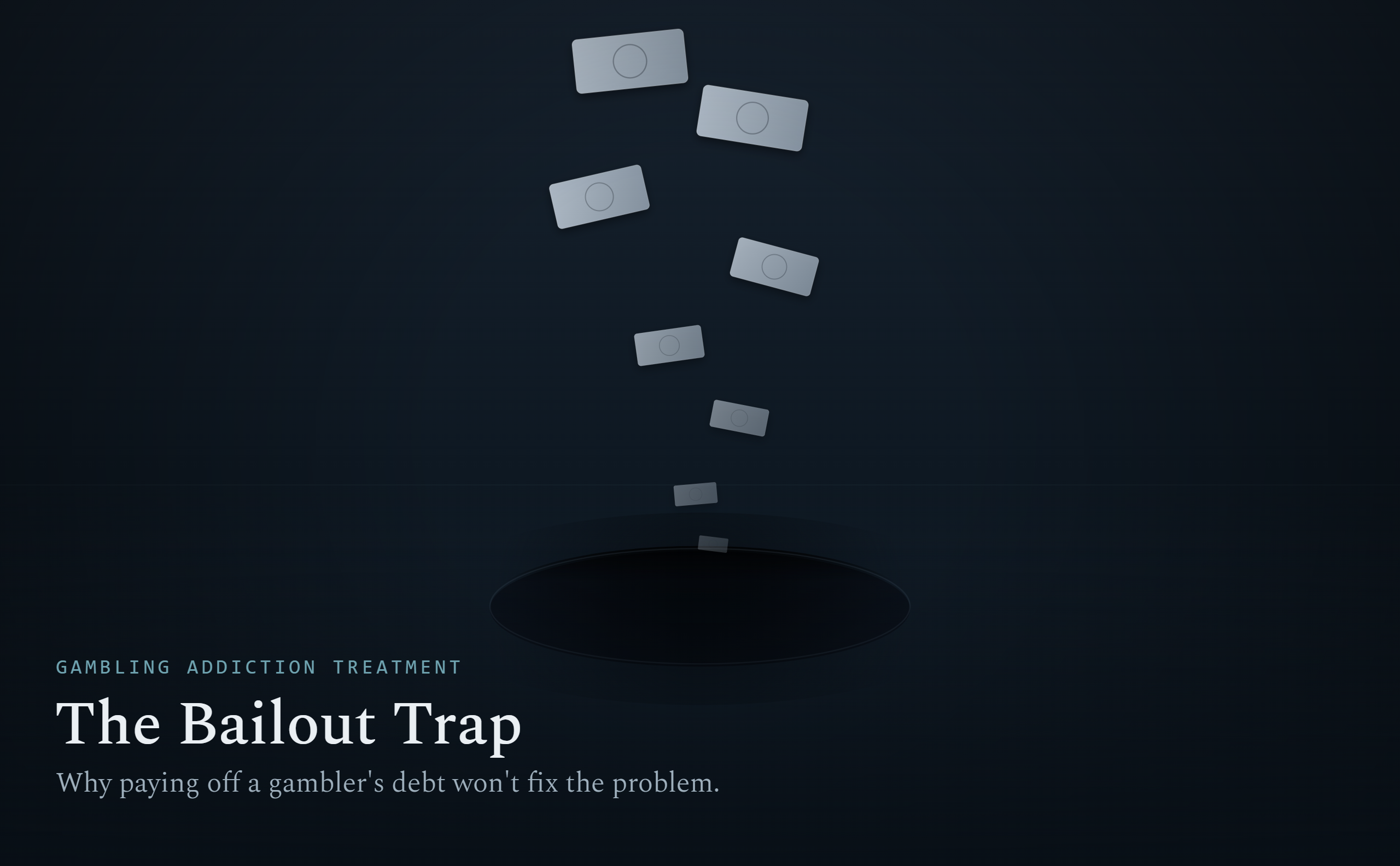
It usually happens in the morning.
The fog of the night before has lifted. The adrenaline of the action is gone, replaced by that familiar, heavy pit in your stomach. You look at your bank account. You look at your sleeping family. And you think: “I cannot do this one more time.”
So, you open your phone and you search: “How to ban myself from casinos.”
If you are reading this right now, you are likely in that moment. First, take a breath. It takes immense courage to admit you need a barrier between you and the bet. That search wasn’t a sign of weakness; it was your first act of strength.
But here is the truth that most websites won’t tell you: Self-exclusion is a lock, but it is not a cure.
At Prescott House's Gambling Program we work with men every day who have banned themselves from every casino in the state and installed every blocker on their phone, yet still found a way to place a bet. Why? Because you cannot lock a door against a ghost that is already inside the house.
This guide will show you exactly how to build the walls to stop the bleeding—and then, how to heal the wound so you no longer need them.
The Tactical Guide: How to Build the Wall
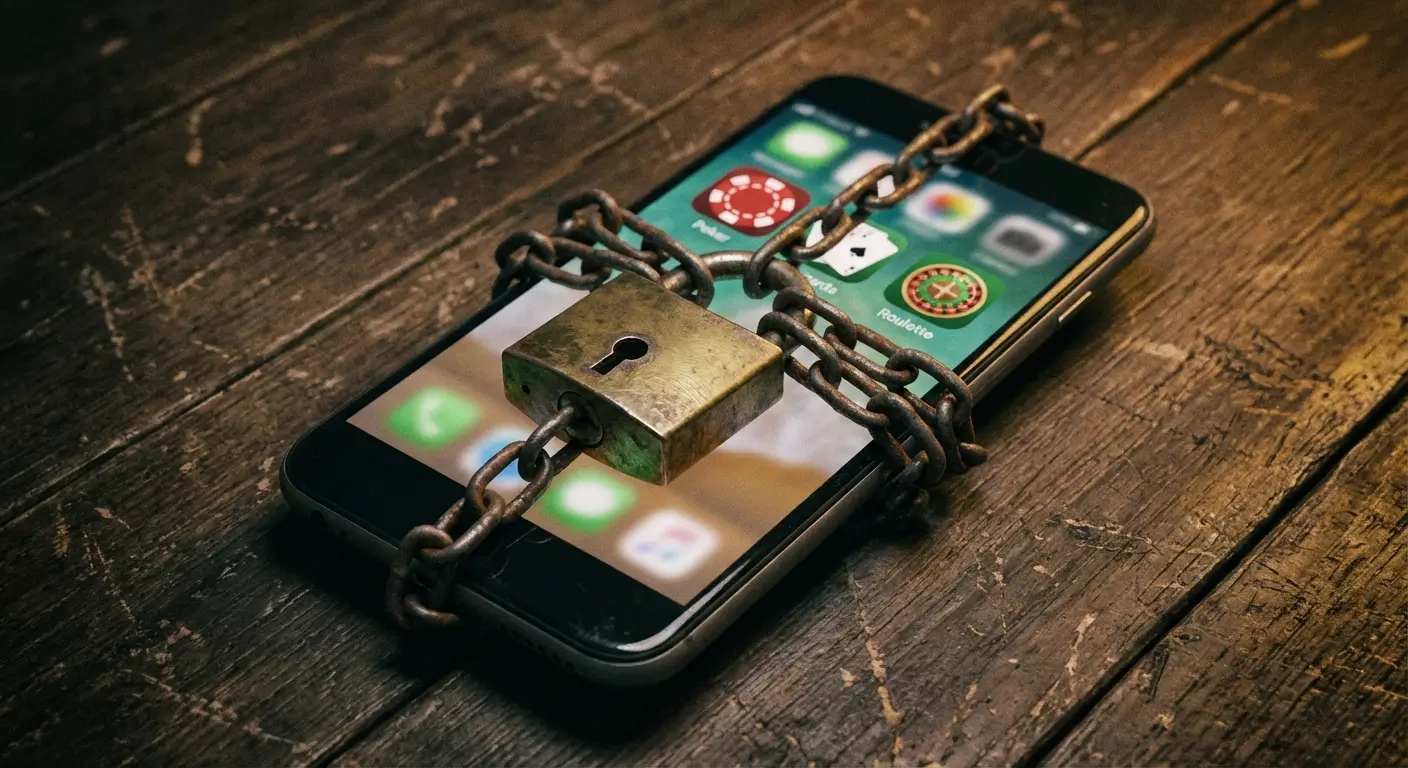
If you are ready to self-exclude, you need to do it effectively. Depending on where you live and how you gamble, there are three distinct "walls" you need to build immediately.
1. The Physical Wall (Brick & Mortar Casinos)
If your demon lives at the blackjack table or the slot machine, you need to engage the state.
- State Gaming Commissions: Almost every state with legal gambling (like PA, NJ, NV) has a "Self-Exclusion Program." You can voluntarily place your name on a list that makes it illegal for casinos to let you play.
- The Consequence: If you are caught on the premises, you will be escorted out. In some states, you can be charged with trespassing and any winnings will be confiscated.
- How to do it: In many states, you must do this in person at a state police post or the security office of a casino. Yes, walking into the casino not to play is terrifying. Bring a friend. Sign the paper. Walk out.
2. The Digital Wall (Online Betting)
This is the hardest wall to build because the casino is in your pocket.
- Device Blocking: We highly recommend software like Gamban. Unlike simple parental controls, Gamban is designed specifically to block thousands of gambling sites and apps across your devices. It is difficult to uninstall, which is exactly what you need.
- State Lists: Many states now have separate exclusion lists for iGaming and Sportsbooks. If you ban yourself from the physical casino, ensure that ban extends to their app. Do not assume it is automatic.
3. The Financial Wall (The Bank Block)
This is the step most men miss.
- The "Gambling Toggle": Log into your banking app. Many major banks (Chase, Bank of America, etc.) now have a feature in their security settings to "Block Gambling Transactions." Turn it on.
- Merchant Category Code 7995: If your bank doesn't have an app toggle, call them. Tell them to block "Merchant Category Code 7995." This is the code used for betting transactions. It adds a layer of friction that can stop a deposit in its tracks.
The Reality Check: "Why Can I Still Bet?"
We need to be honest with you. You can sign every paper and download every app, and you might still find yourself gambling next week.
- The "Whac-A-Mole" Problem: If you ban yourself in Pennsylvania, you can drive to New Jersey. If you ban yourself in New Jersey, you can drive to Delaware.
- The Offshore Loophole: Unregulated, offshore casinos do not care about US state exclusion lists. They pop up faster than regulators can shut them down.
- The VPN Workaround: We know that the "addict brain" is smart. It knows how to use a VPN to trick a blocker.
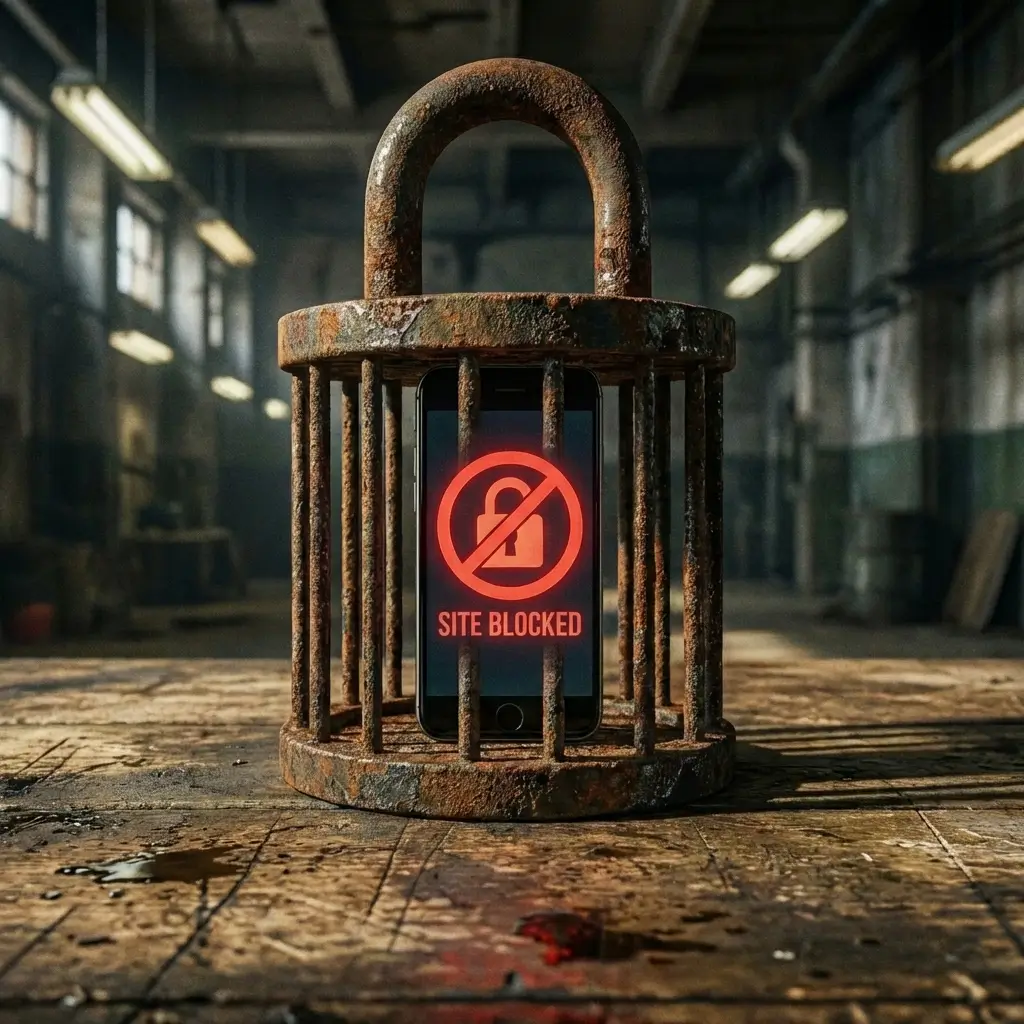
We say this not to discourage you, but to prove a point: Barriers break.
If you are relying solely on a software blocker to save your life, you are fighting a losing battle. If the urge to escape reality is strong enough, you will climb over the wall you just built.
For an excellent video to help get you started watch this well done piece on the ODAAT Gambling Awareness youtube channel.
The Psychology: Why Banning Works (When It Works)
So, if barriers can be broken, why bother?
Because of Time.
Neuroscience tells us that an intense craving or "urge" is like a wave. It builds, it peaks, and eventually, it crashes. This cycle often lasts only 15 to 30 minutes.
- Without self-exclusion, that 15 minutes is enough time to open an app and lose a paycheck.
- With self-exclusion, you hit a roadblock. Your card is declined. The app won't load. The security guard checks your ID.
That roadblock buys you the precious minutes you need for your "logic brain" to wake up and take the wheel back from your "addict brain." It buys you the time to call a sponsor, a spouse, or a therapist.
The Crash: What Happens When the Noise Stops
This is the part no one warns you about. You might think that once you sign the exclusion papers, you will feel relieved. And you will—for about 24 hours.
But then, the crash hits.
Unlike alcohol or opioids, gambling doesn't have physical withdrawal symptoms like shaking or sweating. But it has a massive emotional withdrawal. When you are gambling, your brain is flooded with dopamine. When you stop, that supply is cut off instantly.
In the days following self-exclusion, you may experience:
- The "Grey" World: Everything feels boring. Food tastes bland. TV isn't interesting. Your brain is starving for the "high" of the bet.
- Extreme Irritability: Small things will set you off. You might snap at your wife or kids for no reason. This is the "Dry Gambler" syndrome—you aren't betting, but you are still suffering.
- Restlessness: You physically cannot sit still. You feel like you need to crawl out of your skin.
This is the danger zone.
Most men relapse not because they want to win money, but because they just want to feel something other than this boredom and agitation.
Self-exclusion removes the access to the drug, but it doesn't treat the withdrawal. If you try to sit in this phase alone, your own mind will eventually convince you that gambling is the only way to feel normal again.
Why "Willpower" Isn't Enough for Men
At Prescott House, we see this story constantly. A man tries to handle his addiction like a business problem: Identify the issue, cut the cost, move on.
But addiction isn't a business problem. It’s an isolation problem.
When you self-exclude, you are often doing it alone. You are white-knuckling it in secret. But secrecy is where the addiction grows back.
- The "Lone Wolf" Trap: Men are taught to handle their problems on their own. In recovery, this is fatal. If you are the only one holding the keys to your recovery, you will eventually let yourself out.
- The Need for a Platoon: You cannot fight a war alone. You need other men who know exactly how heavy that guilt is.
This is why self-exclusion is often called a "test of dedication." Signing the paper proves you are willing to change. But treatment provides the tools to actually make that change stick.
The Solution: From "Banned" to "Recovered"
Self-exclusion is an emergency brake. It stops the car before it goes off the cliff. But it doesn't get you out of the woods. You are still sitting in the car, alone, in the dark.
This is where Recovery begins.
At Prescott House, we believe that the opposite of addiction is not "sobriety"—it is connection.
- The 12-Step Connection: In the 12 Steps, admitting you are powerless (Step 1) is the foundation. Signing a self-exclusion form is a physical admission of Step 1.
- The Sponsor: A ban list cannot answer the phone at 2:00 AM when you are sweating and anxious. A sponsor can.
- The Brotherhood: Addiction thrives in secrecy. Self-exclusion is a private act; recovery is a community act. You need to be around other men who know the specific weight of that shame and can help you lift it.
Don't just lock the door and sit in the hallway waiting for the urge to go away. It won't. You have to fill that room with something else—new habits, new friends, and a new purpose.
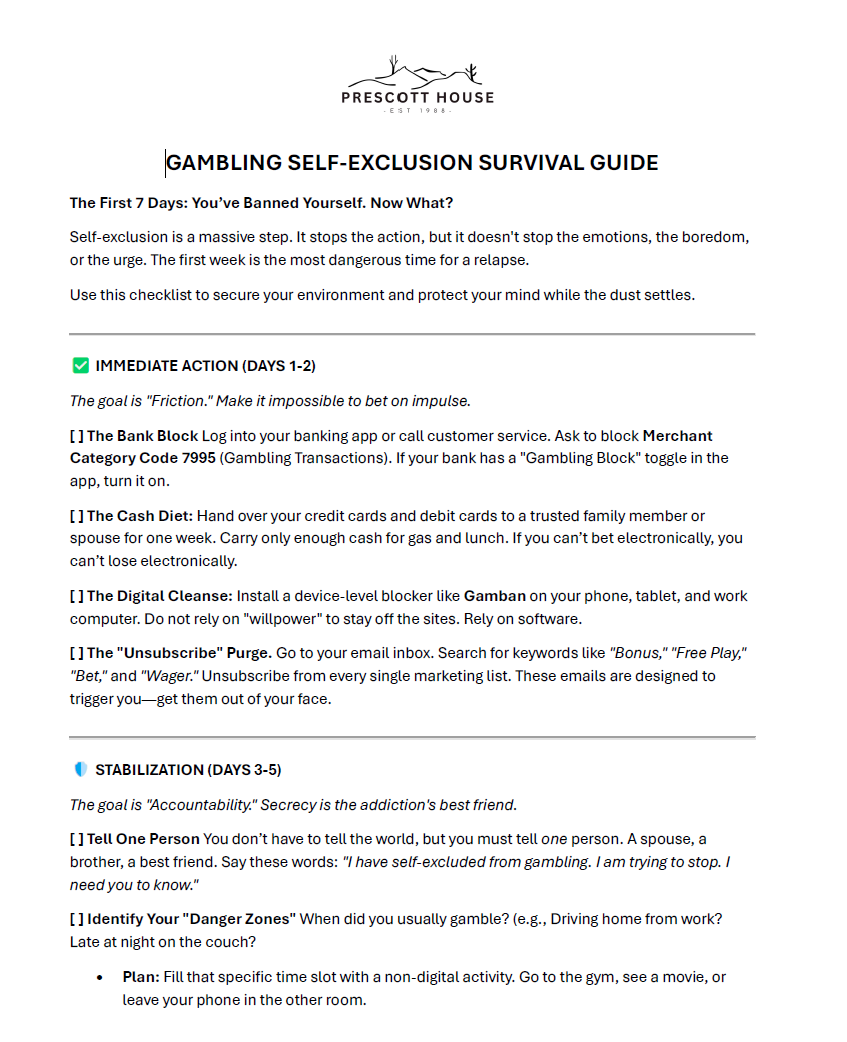
📥 FREE DOWNLOAD: The "First 7 Days" Survival Checklist
You’ve signed the papers. You’ve blocked the apps. Now you have a lot of free time and a lot of raw emotion. The first week is the hardest.
[Download our Free "First 7 Days" Checklist Here]
- Includes: How to tell your family, what to do during "danger hours" (7 PM - 11 PM), and how to find your first meeting.
You Don't Have to White-Knuckle This Alone
If you have self-excluded but are still white-knuckling through the day, fighting the urge to find a loophole, it is time to get professional help. The barrier is up. Now let’s fix the foundation.
Call Prescott House today at (866) 425-2470. Let’s turn that "pause" into permanent freedom.
📚 Sources & Further Reading
- National Council on Problem Gambling (NCPG): A state-by-state list of help resources and self-exclusion programs.
- Gamban: The device blocking software recommended in this article.
- Gamblers Anonymous (GA): Find a local in-person meeting near you.
- Mayo Clinic: Medical information on the symptoms and causes of compulsive gambling.
Related Gambling Addiction Readings
- Gambling Addiction Recovery — A full look at Prescott House’s approach to recovering from gambling addiction. (Read more →)
- The Link Between Gambling Addiction and Mental Health — Explores how gambling problems interact with anxiety, depression, and emotional distress. (Read more →)
- FAQs about Gambling Addiction — Answers key questions around symptoms, treatment, and aftercare. (Read more →)
- Gambling Addiction Treatment at Prescott House — Overview of the program and services. (Read more →)
A dedicated gambling recovery track for men
Long-term residential care with trauma-informed clinicians, for men whose gambling has taken over and the families dealing with the damage.