It's 11:00 PM. You're exhausted. You climbed into bed 20 minutes ago, closed your eyes, and... nothing. Your mind is running laps. Your heart feels like it's tapping out a morse code message nobody asked for. You mentally retrace your day and land on it: that 4:00 PM latte you grabbed to power through the afternoon slump.
But here's the part that trips most people up — you stoppedfeelingthe caffeine hours ago. The buzz faded. The alertness dissolved. So why is your brain still refusing to clock out?
The honest answer is that caffeine is a lot sneakier than most people give it credit for. The feeling wears off. The chemical does not. Understanding the difference between those two things will completely change how you think about your daily coffee habit — and quite possibly, how well you sleep tonight.
In this post, we'll break down the science of caffeine's half-life, walk through exactly what's happening in your body from first sip to full exit, and give you practical, evidence-based strategies for timing your intake so it stops quietly sabotaging your sleep.
The Science: Understanding Caffeine's Half-Life
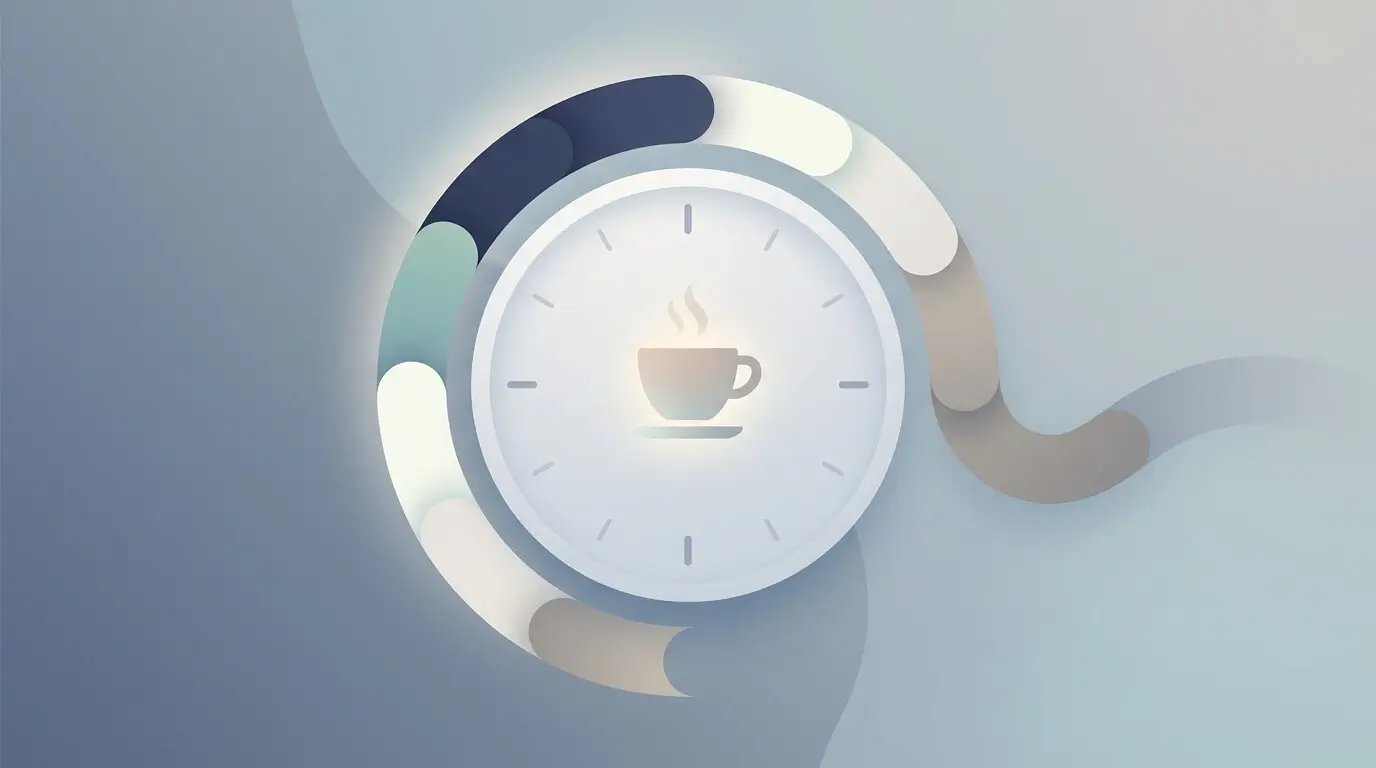
The term "half-life" sounds like something out of a chemistry lecture, but the concept is straightforward. A drug's half-life is simply the amount of time it takes your body to eliminate 50% of it from your system. Every substance that enters your bloodstream has one, and caffeine is no exception.
For most healthy adults, caffeine carries an average half-life of4 to 6 hours. That range matters, and we'll get to why it varies so much between people in a later section. But first, let's look at what that actually means in practice — because the math here is genuinely eye-opening.
Say you drink a large coffee containing around200mg of caffeineat2:00 PM. Here's how the numbers play out:
- By 7:00 PM:Your body has processed roughly half of it. You still have approximately 100mg of caffeine actively circulating in your bloodstream.
- By midnight:Another half-life has passed. You're now carrying around 50mg — roughly the equivalent of a can of cola — right as you're trying to fall asleep.
That 50mg isn't just a number sitting quietly in the background. It is biologically active. It is doing something. And what it's doing is working against your sleep, even if you can't feel the "buzz" anymore.
This is the gap that catches most people off guard. We tend to use our subjective experience as the measuring stick —"I don't feel wired, so I must be fine."But your liver doesn't care how you feel. It's processing caffeine on its own schedule, and that schedule is slower than most of us assume.
According to theSleep Foundation, caffeine consumed even six hours before bedtime can measurably reduce total sleep time. That's not a warning about late-night espresso shots. That's a warning about your mid-afternoon coffee break.
The takeaway from the half-life concept alone is this:timing your last cup matters far more than how many cups you drink.A single coffee at 5:00 PM will do more damage to your sleep than two cups at 8:00 AM.
What Caffeine Actually Does Inside Your Brain
To really understand why lingering caffeine is such a problem for sleep, you need to meet adenosine — the neurotransmitter your brain has been quietly using to track how long you've been awake.
Throughout the day, as your neurons fire and your brain does its work, it produces adenosine as a natural byproduct. The longer you stay awake, the more adenosine accumulates, and the more strongly it binds to receptors throughout your brain. That progressive heaviness you feel as the afternoon wears on? That's adenosine doing exactly what it's designed to do — building sleep pressure, nudging you toward rest.
Caffeine doesn't give you energy in any direct metabolic sense. It doesn't add fuel. What it does is far more clever, and ultimately, more disruptive: itblocks adenosine receptors, fitting into them like a key that turns the lock but doesn't open the door. The adenosine is still accumulating the entire time you feel alert and sharp. You just can't feel it building — until the caffeine clears and all that backlogged fatigue rushes in at once. That's not a caffeine crash. That's your brain finally getting the message it's been trying to deliver for hours.
Here's why that matters for sleep specifically. When you lie down at night with residual caffeine still in your system, those adenosine receptors are still partially blocked. Your brain knows it's tired. Your body knows it needs to recover. But caffeine is holding the door partially shut — suppressing not just the feeling of sleepiness, but the actual depth of the sleep stages your body most needs to reach.
Why Caffeine Affects Everyone Differently
You've probably noticed that caffeine doesn't work the same way for everyone. Maybe you have a friend who downs an espresso after dinner and sleeps like a log, while you're still wired at midnight from a single afternoon cup. Neither of you is imagining things. The difference comes down to biology, and it's more variable than most people realize.
Genetics Play a Surprisingly Large Role
The primary enzyme responsible for metabolizing caffeine in your liver is calledCYP1A2. How efficiently your body produces and uses this enzyme is largely determined by your genetics — specifically, which variant of the CYP1A2 gene you inherited. People with the "fast metabolizer" variant clear caffeine relatively quickly. People with the "slow metabolizer" variant can have a caffeine half-life that stretches well beyond the average range, meaning the same afternoon cup lingers hours longer than it would for someone else.
If you've always felt more sensitive to caffeine than the people around you, this genetic variation is likely a significant part of the explanation — and it's a completely legitimate reason to set your personal cutoff time earlier than the general guidelines suggest.
Age, Medications, and Hormones
Caffeine metabolism also naturally slows as we age. Liver enzyme activity declines over time, which means the same coffee that felt perfectly manageable at 30 may genuinely interfere with sleep at 50 — not because anything went wrong, but because your body is processing it at a different pace. This is one of the more common and underappreciated reasons that sleep quality tends to shift as people get older.
Several medications interact directly with the CYP1A2 enzyme as well, either accelerating or significantly slowing caffeine clearance. Oral contraceptives can nearly double caffeine's half-life. Certain antidepressants, antibiotics, and antifungal medications can have a similar effect. If you've noticed an unexpected increase in caffeine sensitivity that coincides with starting a new medication, that connection is worth raising with your doctor.
Liver Health and Recovery
Because the liver is where caffeine metabolism happens, anything that affects liver function changes how long caffeine stays active in your system. At Prescott House, this is something we pay close attention to when supporting clients in early recovery from alcohol use. Prolonged heavy drinking can compromise liver function in ways that meaningfully extend caffeine's half-life — which means someone in early sobriety may be significantly more sensitive to the sleep-disrupting effects of afternoon caffeine than they realize. When someone is already navigating disrupted sleep patterns, mood regulation challenges, and physical recovery, unrecognized caffeine sensitivity can quietly compound all of it.
The Practical Caffeine Cutoff: What Time Should You Actually Stop?
Given everything above, the question becomes practical: when should your last cup actually be?
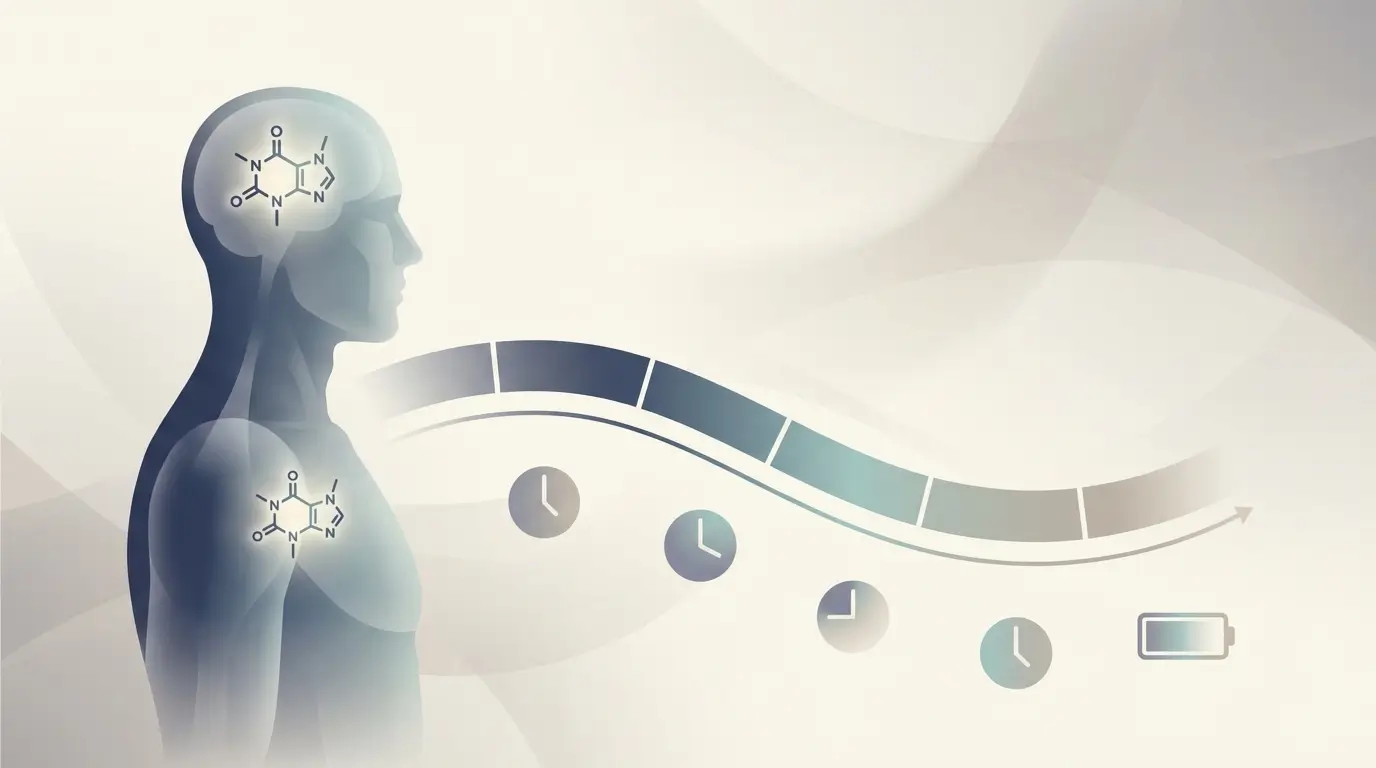
The evidence-based general guideline is to cut off caffeine intake at least8 to 10 hours before your intended bedtime. For someone aiming to be asleep by 10:00 PM, that means noon to 2:00 PM is the outer edge of a reasonable window. For sensitive individuals — slow metabolizers, older adults, those on certain medications — moving that cutoff to late morning is a genuinely worthwhile experiment.
It's also worth noting that this recommendation isn't about eliminating caffeine. It's about giving your body enough clearance time to allow the deeper, more restorative stages of sleep to function properly. The goal isn't zero caffeine — it's caffeine that workswithyour biology instead of against it.
Conclusion: The Cup You Don't Feel Is Still the Cup That Counts
Here's what it all comes down to: caffeine is not done with you when you're done feeling it. The alertness fades. The buzz dissolves. You feel completely normal. And all the while, the chemistry is still running its quiet course — sitting in your adenosine receptors, nudging your sleep architecture out of alignment, shaving time off the deep, restorative rest your brain and body genuinely need.
The key takeaways from everything we've covered are worth holding onto. Caffeine's average half-life is 4 to 6 hours — meaning a 2:00 PM coffee still has measurable, biologically active levels circulating in your system at midnight. That half-life varies significantly depending on your genetics, age, liver health, medications, and other individual factors. Caffeine doesn't just delay sleep onset; it suppresses the depth of sleep even when you do fall asleep. And the practical solution isn't to give up coffee — it's to give your body enough of a runway between your last cup and your pillow. An 8 to 10 hour cutoff window is where the evidence consistently points.
The simplest experiment you can run this week costs nothing: move your last cup of coffee to before 2:00 PM and hold that line for seven days. Don't change anything else. Just that one variable. Pay attention to how long it takes you to fall asleep, how you feel when you wake up, and whether that dragging mid-morning fatigue starts to loosen its grip. For many people, the difference is striking — and it arrives faster than they expected.
If you've been waking up exhausted despite getting enough hours in bed, afternoon caffeine timing is one of the first and most accessible levers worth examining. Not because caffeine is the enemy, but because understanding how it works puts you back in control of something that may have been quietly working against you for years.
And if your relationship with sleep feels tangled up in something larger — anxiety, stress, recovery from substance use, or the kind of exhaustion that a simple schedule change won't touch — that's worth paying attention to too. AtPrescott House, we understand that sleep disruption rarely exists in isolation. It's often connected to deeper patterns of physical and emotional health that deserve real support, not just sleep hygiene tips. If you or someone you care about is navigating recovery and struggling with sleep, mood, or overall wellbeing, we're here to help. Reach out to our team to learn more about how we approach whole-person recovery — because rest isn't a luxury in healing. It's the foundation everything else is built on.
Your next good night's sleep might start with a decision you make tomorrow afternoon. That's a small shift with a genuinely meaningful return — and it's entirely within reach.
References
- Spilling the Beans: How Much Caffeine is Too Much? — U.S. Food and Drug Administration
- How Long Does It Take for Caffeine to Wear Off? — Sleep Foundation
- Caffeine & Sleep: How Long Does Caffeine Keep You Awake? — Houston Methodist
At Prescott House, Recovery Becomes Reality
While caffeine doesn't carry the heavy neurological toll of more "serious" stimulants, we see many men arrive with systems that are completely burnt out by high-potency energy drinks, pre-workouts, and constant espresso. When your body relies on a chemical "kick" just to function, your natural sleep cycles and stress responses (cortisol) get thrown out of whack.
At Prescott House, we believe true recovery involves getting back to a baseline of natural vitality. We help men reset their systems, move past the irritability of "caffeine crashes," and rediscover what it feels like to have steady, authentic energy.
- Long-Term Addiction Treatment for Men — Structured healing and accountability for lasting recovery.
- Substance Abuse Treatment — A full continuum of care for alcohol and drug dependence.
- Gambling Addiction Treatment — Break the cycle of financial and emotional strain.
- Sex & Process Addiction Programs — Compassionate support for compulsive behaviors.
- Dual Diagnosis Treatment — Integrated care for mental health and substance use disorders.
Learn More About Our Program →