Let's be brutally honest for a second. With Spring Break and St. Patrick's Day right around the corner, a lot of people are getting ready to celebrate. But if you are quietly struggling with substance abuse or a process addiction, are you actually excited for the holiday? Or are you just relieved that, for one weekend, your habits will look "normal" compared to everyone else?
For a high-functioning addict, socially acceptable drinking holidays aren't really about the celebration—they act as a shield. They provide the ultimate cover story. When the calendar gives you a pass, it’s easy to look in the mirror and say, "I'm just having fun like everyone else."
The numbers tell a staggering story about how normalized this excess has become. St. Patrick's Day is widely considered one of the top drinking holidays in the United States, with 32% of men admitting to binge drinking during the festivities. On average, those celebrating will consume 4.2 drinks. But for someone whose life is already secretly revolving around alcohol, drugs, or process addictions, a holiday isn't a one-off event. It is simply a socially sanctioned excuse to go harder, without the fear of judgment.
At The Prescott House, we know exactly what this looks like. For 35 years, our long-term treatment center has helped men untangle the complex web of addiction. We have a specific niche in treating sexual addictions, gambling, and other process addictions, alongside severe substance abuse. Time and time again, we see that these behaviors rarely exist in a vacuum; they almost always tie back to an overarching mental health issue that is desperately crying out for relief.
We’ve seen the "holiday excuse" play out thousands of times. In the beginning, you use the holidays to justify the behavior. You party on St. Patty's, you go all-out for Spring Break, and you blend in with the crowd. But eventually, the addiction progresses. The holiday ends, everyone else goes back to work or school, and you are left isolated, exhausted, and stuck in the exact same cycle. The calendar dates stop mattering, and the addiction takes over entirely.
If you are a parent or loved one watching this unfold, the holidays are often the only time you get a clear look at what is really going on. You might notice that your loved one only seems to come alive when there is an excuse to drink or use, or that their holiday binge drinking looks a lot more like a dependency they can't turn off. Understanding this manipulation is helpful and here is a great video that can help.
You don't have to wait for the fallout of another holiday to seek help, and you don't have to live your life jumping from one excuse to the next. Let's break down exactly how to spot the difference between heavy celebration and a high-functioning addiction—and what to do when the excuse finally wears off.
The "Justification Phase": How Spring Festivities Become a Shield
When March rolls around, the cultural narrative shifts to letting loose. For the average person, St. Patrick’s Day or a Spring Break trip is simply a weekend of heavy celebration before getting back to the grind. But for the high-functioning addict, these spring festivities serve a completely different purpose: they are a meticulously timed shield.
In the clinical world, and in our 35 years of experience at The Prescott House, we often refer to this as the "Justification Phase." It is a powerful psychological trick where an individual uses the social calendar to validate their substance abuse or destructive behaviors.
Think about the internal dialogue. If you are drinking heavily by yourself on a random Tuesday in October, it’s hard to ignore the reality of a dependency. But if you are binge drinking on March 17th, or going off the rails during a Spring Break getaway, the guilt temporarily vanishes. You can look your spouse, your friends, and yourself in the mirror and say, "I don't have a problem. I'm just having fun like everyone else." The environment normalizes the extreme. The sheer volume of people partying creates a smokescreen, allowing a high-functioning addict to mask a severe dependency as just "blowing off steam."
It’s Not Just About Alcohol
This illusion stretches far beyond just signs of a drinking problem. Spring trips and party destinations provide the ultimate cover story for a wide range of hidden struggles.
For men battling gambling disorders, a "bachelor party" or Spring Break trip to a casino town is the perfect excuse to drain a bank account under the guise of celebration. For those struggling with sexual addictions or other process addictions, the chaotic, consequence-free environment of a party town provides an easy, socially acceptable avenue to act out.
The Underlying Reality: Chasing Relief, Not a Party
Here is the hardest truth to swallow during the Justification Phase: underneath the smokescreen of the party is almost always an overarching mental health issue.
High-functioning addicts are often carrying immense burdens—profound stress, untreated anxiety, depression, or deep-seated trauma. The excessive drinking, drug use, or acting out isn't actually about having a good time. It is a desperate attempt to self-medicate without drawing suspicion from the people around them. They aren't chasing the party; they are chasing relief. And a widely accepted event like St. Patrick's Day simply gives them permission to do it out in the open.
When the Excuse Wears Off: The Isolating Reality of Addiction
There comes a tipping point in the timeline of every high-functioning addict. In the beginning, the spring festivities are the perfect cover. But addiction is a progressive disease, and eventually, the mask becomes too heavy to hold up.
You wake up one day and realize that St. Patrick's Day has come and gone, and you didn't even notice. You aren't packing bags for a Spring Break trip with friends. You aren't heading to a crowded parade. Instead, you are sitting at home, alone, pulling away from the people you used to celebrate with.
The most terrifying part isn't just that you are missing out on life—it’s the realization that you no longer care. When a substance abuse issue or process addiction takes full control, the social aspect completely evaporates. The "fun" is gone. You no longer need the excuse of a party to drink, use, gamble, or act out because the addiction has become the only priority. This is the exact moment when the "high-functioning" label shatters. You realize you aren't functioning anymore; you are just surviving.
Signs the "High-Functioning" Phase is Over
At The Prescott House, we often see men who come to us right after this realization hits. They recognize that the illusion has broken down. Here is what that shift from "functioning" to "isolated" usually looks like:
- Apathy Toward Milestones: You no longer care about holidays, vacations, or social gatherings. The only thing that matters is securing your next drink, drug, or hit of dopamine.
- Choosing the Substance Over the Event: If going on a Spring Break trip means you might not have access to your drug of choice, or you won't be able to hide your habits from your friends, you simply opt out and stay home alone.
- The Breakdown of the "Double Life": You start dropping the ball at work, ignoring your family, and missing obligations. The energy it takes to pretend you are "just having fun" is completely exhausted.
- Drinking or Using in Secret: The behavior moves from the crowded bar on St. Patrick’s Day to the isolation of a locked bedroom or parked car.
When the underlying mental health issues—the anxiety, the trauma, the depression—finally overpower the desire to keep up appearances, the isolation becomes absolute. But realizing that you have crossed this line doesn't have to be a death sentence. It is often the exact wake-up call needed to finally ask for help.
Spotting the Cracks: A Guide for Families and Loved Ones
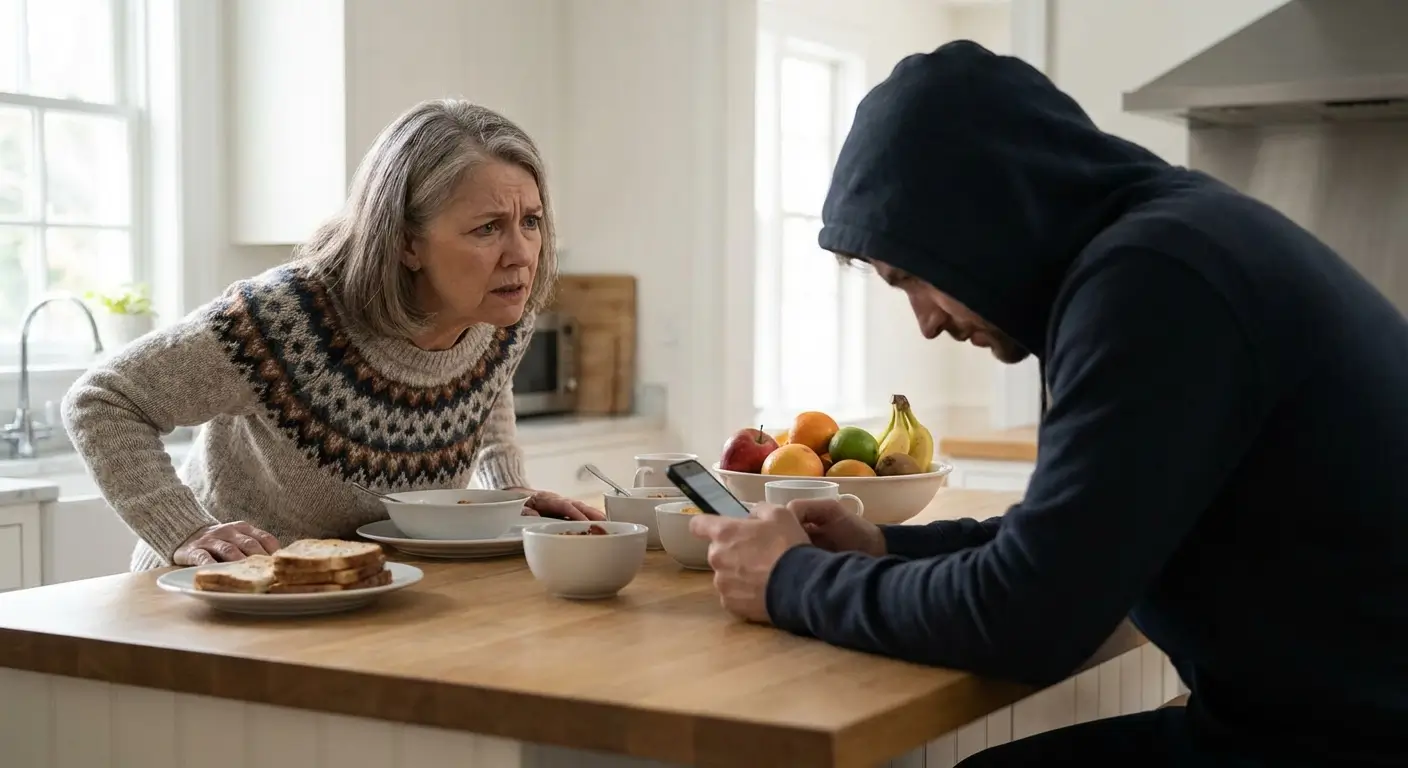
Often, it is not the individual struggling who makes the first phone call—it is a parent, a spouse, or a partner. Spring Break, a weekend trip, or a family gathering is frequently the first time in months you might spend consecutive, uninterrupted days with your loved one.
Because the high-functioning addict is a master of the "double life," they can easily hold things together for a quick phone call or a brief dinner. But maintaining that illusion over a three-day weekend or a week-long spring vacation is exhausting. Eventually, the cracks begin to show.
At The Prescott House, our 35 years of experience treating men has shown us that addiction—whether it is chemical or behavioral—leaves a specific footprint. Furthermore, these dependencies rarely exist on their own; they are almost always co-occurring with underlying mental health issues like severe anxiety, depression, or unresolved trauma.
If you are trying to determine whether your loved one is just "letting loose" for the spring festivities or masking a severe problem, here are the clinical and behavioral shifts to look for:
1. The "Substance Shift" (Alcohol and Drugs)
During a spring trip or St. Patrick's Day celebration, a high-functioning addict's consumption will look vastly different from the rest of the group.
- Pre-loading and Sneaking: They might drink heavily before the actual event begins, or you may find evidence that they are sneaking alcohol or drugs in secret to maintain a baseline.
- Aggression When Cut Off: If the environment doesn't allow for their substance use—for example, a dry family event or a travel day—pay attention to their mood. Extreme irritability, physical restlessness, or sudden outbursts are common signs of physical or psychological withdrawal.
2. The Process Addiction Pivot (Gambling and Sex Addictions)
Process addictions are incredibly insidious because there is no physical substance you can smell on their breath. However, the behavioral toll is just as devastating.
- Financial Discrepancies: A gambling addiction is often hidden behind the guise of "vacation expenses." If your loved one is burning through cash at an alarming rate or constantly stepping away to check their phone for sports betting apps during family time, it is a red flag.
- Extreme Digital Secrecy: For men struggling with sexual addictions or intimacy disorders, a break in their normal routine can trigger severe acting out. If they are isolating for hours, guarding their devices with extreme paranoia, or emotionally completely checked out of the family dynamic, the spring trip is likely being used as a cover.
3. The Mental Health Toll
Perhaps the most telling sign that the "high-functioning" phase is ending is the visible deterioration of their mental health. You will notice that the "party" isn't bringing them any actual joy. Instead of looking relaxed on vacation, they look burdened, exhausted, and deeply depressed. They aren't celebrating; they are self-medicating.
Trust your gut. If your intuition is telling you that their behavior has crossed the line from a "phase" into a dependency, you are likely right. The worst thing a family can do is wait for the next event or the next crisis to address the reality of what is happening right now.
Stop Waiting for the Next Excuse: Finding Real Recovery

Dropping the "high-functioning" act is terrifying. If you are the one struggling, asking for help means admitting that the parties, the spring trips, and the holiday celebrations were just a cover story. It means facing the overarching mental health issues—the anxiety, the trauma, or the depression—that you have been working so hard to outrun. But the relief of no longer having to maintain that exhausting double life is immense. You don't have to keep pretending you are "just having fun" when you are secretly fighting to survive.
If you are a parent, partner, or loved one reading this, the time to act is right now. You do not have to wait until after the Spring Break trip is over, and you do not have to wait for a catastrophic "rock bottom" to intervene. In fact, catching the problem while they are still somewhat "functioning" can make the transition into treatment much smoother.
For 35 years, The Prescott House has helped men navigate this exact turning point. We understand the deep shame that accompanies hidden struggles, whether it is severe substance abuse, gambling, sexual addictions, or other process addictions. Our long-term treatment model is designed to do more than just stop the behavior; we treat the whole man, addressing the complex mental health roots that drive the need to escape in the first place.
The spring festivities will eventually end, and the excuses will run out. But you don't have to face the isolation that follows on your own.
Are you ready to stop living on the sidelines of your own life? Our admissions team understands exactly what you are going through. Reach out to The Prescott House today to learn more about our specialized long-term programs. We are here to help you, or your loved one, find a way forward.
References
Liquor Licensees Urged to Serve Responsibly on St. Patrick's Day, the #1 Day for Beer Drinking
Alcohol Facts and Statistics - National Institute on Alcohol Abuse and Alcoholism (NIAAA)
At Prescott House, Recovery Becomes Reality
Dropping the "high-functioning" act and admitting that the spring festivities were just an excuse is terrifying, but it serves as a powerful reminder that recovery is possible—even when the illusion finally shatters. At Prescott House in Prescott, Arizona, we provide the long-term, structured environment men need to heal from substance abuse, intimacy disorders, and process addictions, allowing them to rebuild their integrity from the ground up. Explore our specialized programs:
- Long-Term Addiction Treatment for Men — Structured healing and accountability for lasting recovery.
- Substance Abuse Treatment — A full continuum of care for alcohol and drug dependence.
- Gambling Addiction Treatment — Break the cycle of financial and emotional strain.
- Sex & Process Addiction Programs — Compassionate support for compulsive behaviors.
- Dual Diagnosis Treatment — Integrated care for mental health and substance use disorders.
Learn More About Our Program →