Some achievements come with a ribbon. Some come with a trophy. And some come after years of study, practice, dedication, and a stack of documentation that would make most people quietly close their laptop and go get a snack.
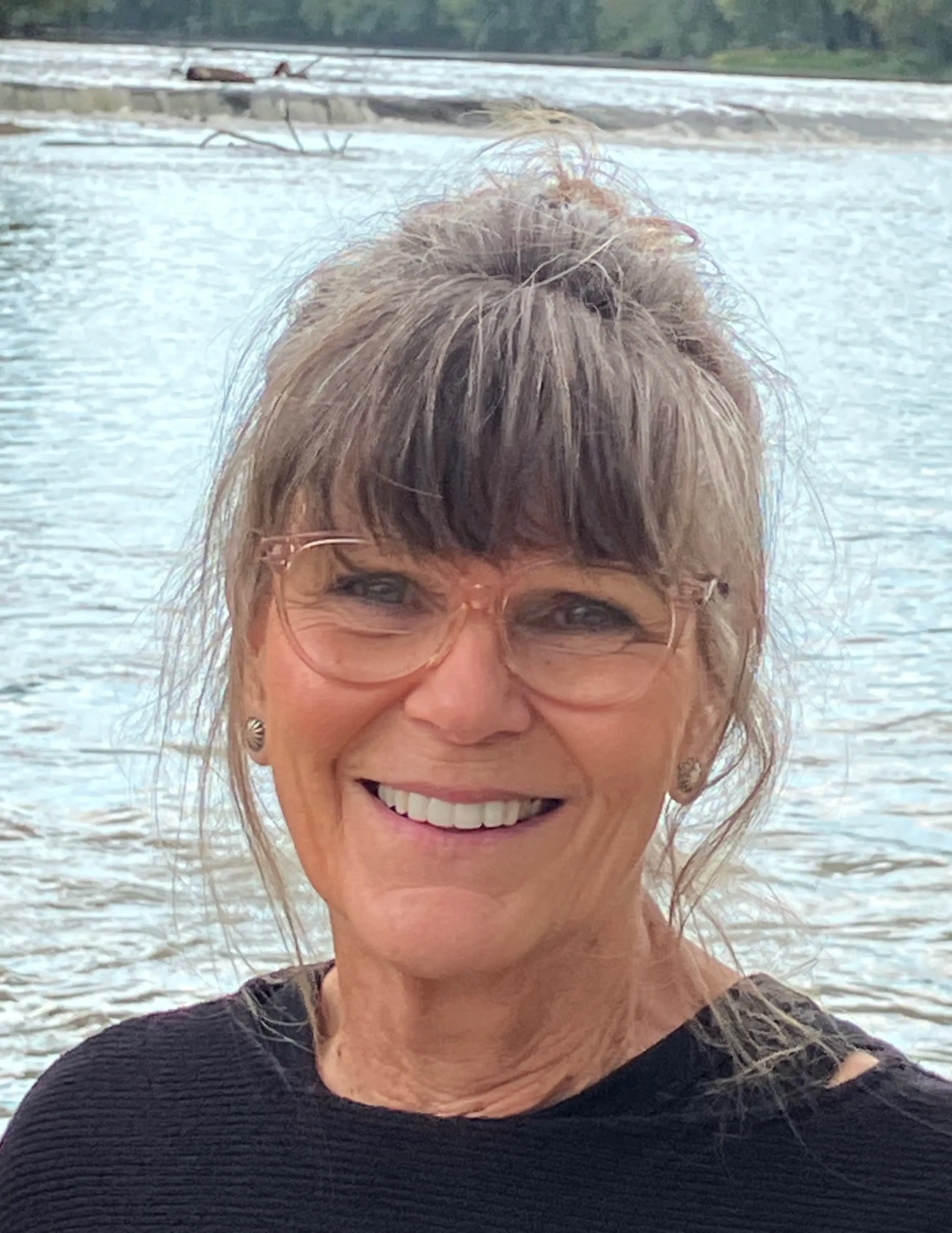
Marsha J. Gehl chose the third option.
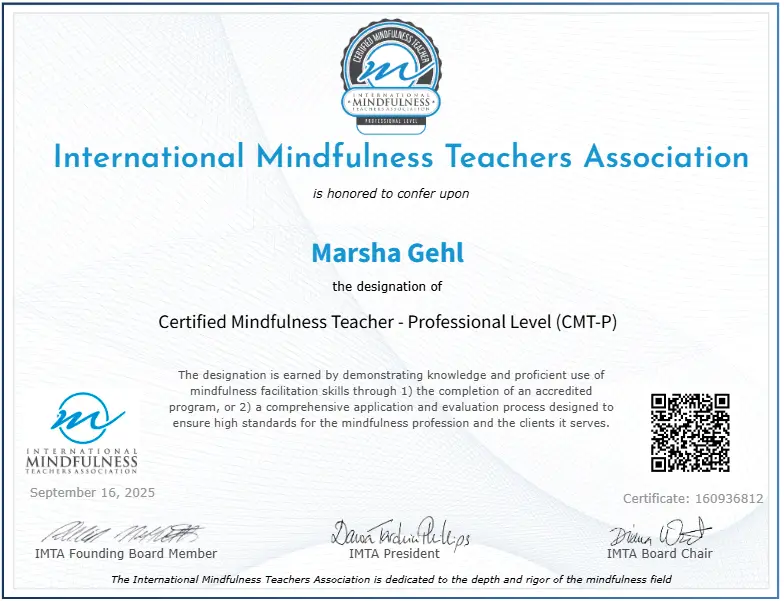
We are over the moon to announce that Marsha has officially earned her CMT-P, Certified Mindfulness Teacher – Professional, through the International Mindfulness Teachers Association (IMTA). And if you are thinking, "That sounds like a big deal," you would be absolutely right.
But First, a Little Context About Who Marsha Actually Is
Here is something that sets Marsha apart before we even get to the certification: she is a Doctor of Chiropractic.
That is not a detail to gloss over. Marsha spent nearly two decades running chiropractic practices, first in Twin Falls, Idaho, and later in private practice. She has spent her entire professional life understanding the body, the nervous system, and the ways that stress, trauma, and unresolved pain show up in real people living real lives. When Marsha talks about the mind-body connection in a mindfulness session, she is not speaking metaphorically. She is speaking from thirty-plus years of healthcare experience.
That combination, a doctor who became a mindfulness teacher, is genuinely rare. And it is a big part of why what she does actually works.
What Is the IMTA, and Why Does It Matter?
About ten years ago, a group of professionals connected to UCLA looked at the mindfulness field and noticed something uncomfortable. Mindfulness had become popular, which was wonderful. But popularity has a way of attracting people who see an opportunity rather than a calling.
Enter IMTA: an organization founded with the specific purpose of raising the professional bar and setting standards that protect both students and teachers. Not everyone who attended a weekend retreat and printed a certificate is qualified to guide someone through the most vulnerable moments of their mental and emotional life. IMTA exists to make that distinction very clear.
Earning a CMT-P designation requires submitting a full documented record of training hours, certifications, supervised teaching experience, and ongoing professional development for formal review by the association's professional standards board. It is one of the most rigorous credentials available in the field. Marsha submitted everything. IMTA reviewed it. And they approved her.
Verify Marsha's professional credentials at the IMTA Certified Teacher Directory. Learn more about IMTA's standards and mission at imta.org. Or view her full credential wallet, every certification, every program, all in one place: credential.net/profile/marshagehl/wallet
The Training Behind the Title
The CMT-P is the headline, but the story behind it spans years of focused, intentional learning. Marsha's training includes:
Mindfulness Meditation Teachers Certification Program (MMTCP) through UC Berkeley's Greater Good Science Center, one of the world's most respected institutions for the science of human flourishing. This alone is a serious credential. Marsha built on it considerably.
Trauma-Sensitive Mindfulness and Advanced Trauma-Sensitive Mindfulness with David Treleaven, PhD. This is specialized, clinically-informed training that most mindfulness teachers never pursue. It matters enormously when working with people who carry trauma, which, in addiction recovery work, is nearly everyone.
Mindfulness Based Stress Reduction (MBSR), the gold standard evidence-based mindfulness program developed at UMass Medical School. Clinically studied, widely respected, and demanding to teach well.
Mindfulness-based Mind Fitness Training (MMFT) with Elizabeth Stanley, PhD. Originally developed for military personnel and high-stress environments, this approach builds resilience and self-regulation at a level that goes well beyond relaxation.
Mindful Schools: Fundamentals and Teacher Essentials, bringing evidence-based mindfulness into educational and community settings.
Say What You Mean: A Mindful Communication Approach with Oren Jay Sofer, integrating Nonviolent Communication with mindfulness practice.
Healthy Minds Master Class through the Healthy Minds Innovations Lab, rooted in the neuroscience of wellbeing.
This is not a list assembled to look impressive. Each of these programs represents a distinct and meaningful area of expertise. Together, they allow Marsha to meet people wherever they actually are, including in the most difficult and vulnerable places.
The Work That Tells the Real Story
Marsha has worked extensively with people in addiction recovery, including as a mindfulness and meditation educator at a residential addiction facility. This is some of the most demanding and meaningful work in the field. It requires a teacher who can hold space with deep knowledge, steady compassion, and the clinical awareness to know when someone needs more than a breathing exercise.
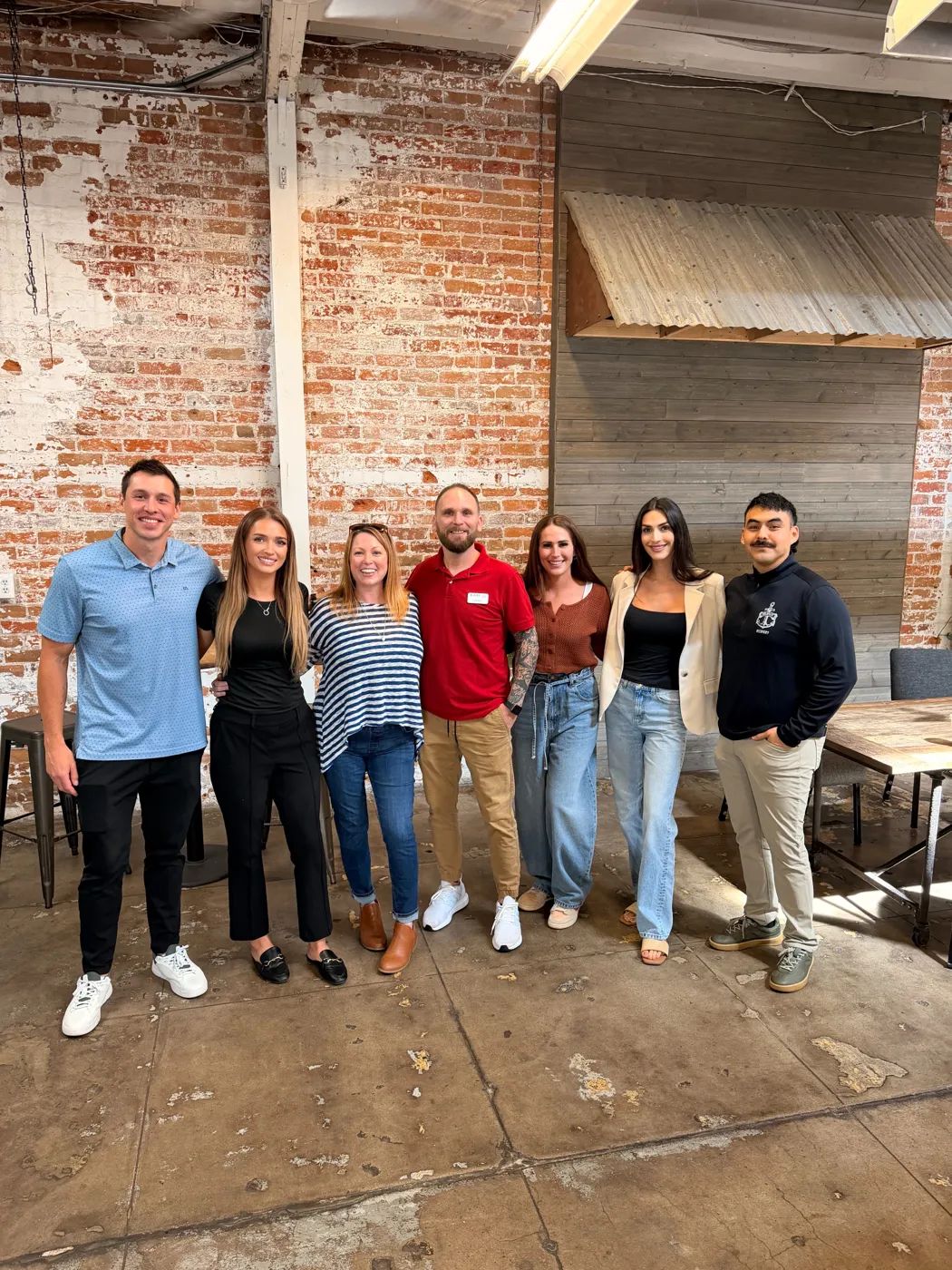
Marsha has been part of our team since 2022, and in that time we have watched her do something genuinely rare. She changes people. Not in the quick-fix, five-stars-and-done kind of way. We are talking about lasting change.
Clients who worked with Marsha have reached out years later to share that the practices she taught them became the thing they leaned on when life got difficult. When cravings came back. When stress piled up. When the world felt like too much. The tools she gave them became real, practical, life-changing skills. Skills that helped them stay present, stay steady, and stay free from the crutch of addiction.
That is not a curriculum. That is a calling.
Why Professional Credentials Actually Protect You
Here is the slightly uncomfortable truth about the wellness world: anyone can call themselves a mindfulness teacher. There is no licensing board that will knock on the door of someone who watched a few YouTube videos and decided to start leading meditation circles.
IMTA was created because this matters. Teaching mindfulness to someone who is working through trauma, addiction, anxiety, or major life transitions is not the same as leading a breathing exercise at a corporate retreat. Done well, it is transformative. Done carelessly, it can cause real harm.
When you work with a CMT-P certified teacher like Marsha, you are working with someone who has been evaluated against real professional standards by people who take this work seriously. And because her credentials are publicly verified, you do not have to take our word for it.
Congratulations, Marsha
To say we are proud feels like an understatement.
Marsha, you have been bringing your whole heart, and your whole background, to this work since the day you joined our team. You have shown up with expertise, compassion, clinical depth, and a genuine commitment to the people you serve. This certification is not a surprise to anyone who has watched you work. It is simply the official confirmation of what we have known all along.
You earned every letter behind your name. Congratulations, Marsha J. Gehl, CMT-P. We are so grateful you are here.
If you are curious about working with Marsha, we would love to connect you. Reach out today and take the first step toward something that just might change everything.
Keep Reading
Curious about mindfulness and how it actually works in addiction recovery? These posts go deeper.
Mindfulness Meditation Can Help You Break Free From Addiction: The connection between mindfulness practice and lasting sobriety is not just philosophical. This post breaks down how training your attention changes the relationship you have with cravings, triggers, and the moments that used to send everything sideways.
Mindfulness for Addiction Recovery: A grounded look at why mindfulness has become one of the most evidence-supported tools in addiction recovery, and what it actually looks like when it is done well.
Mindfulness Techniques for Managing Mental Health Symptoms: Addiction and mental health rarely travel alone. This post covers practical mindfulness techniques for the anxiety, depression, and emotional dysregulation that so often show up alongside recovery.