Take Back the Game: Why Arizona's New Self-Exclusion Campaign Is a Win for Recovery
For years, one of the quieter frustrations in gambling treatment in Arizona has been a logistical one. A person makes the brave decision to self-exclude, fills out the paperwork, gets it notarized (yes, notarized), mails it in... and still has to wonder whether they covered every casino, every app, every tribal gaming facility across the state. Arizona has a lot of tribes. Arizona has a lot of casinos. Until recently, it has also had a lot of confusion.
That is starting to change in a meaningful way.
What Is the "Take Back the Game" Campaign?
The Arizona Department of Gaming recently launched a statewide public awareness campaign called "Take Back the Game," and we think it deserves some applause. The campaign is built around promoting Arizona's voluntary self-exclusion program, and it is reaching people through TV, radio, streaming, social media, and digital advertising across the state in both English and Spanish.
The core message is simple and empowering: you have the power to remove yourself from the game. Literally.
Through the program, Arizonans can now exclude themselves from all regulated tribal casinos, licensed event wagering operators, and fantasy sports contest platforms in one coordinated process. That is not a small thing. That is actually a very big thing.
Watch the video below from the Arizona Department of Gaming.
Why This Matters More in Arizona Than You Might Think
Arizona is home to more tribal gaming facilities than most states. For someone trying to create real distance from gambling, navigating which casinos fell under which exclusion, and whether the sports betting app on their phone was even covered, has historically been its own obstacle course.
We have worked with men at Prescott House who did everything right on paper and still found gaps. Not because they were not trying, but because the system made it harder than it needed to be.
A unified approach that covers tribal casinos and digital wagering platforms at once removes a layer of friction at exactly the moment when friction can be the difference between moving forward and giving up on the idea entirely.
The Timing Could Not Be Better
Arizona's gambling landscape has changed dramatically since sports betting was legalized in 2021. What used to require a drive down the highway now requires nothing more than unlocking a phone. The casino floor had hours, a dress code of sorts, and at minimum a commute that gave a person time to reconsider. A sports betting app has none of those built-in pauses. It is open at 2 a.m. It does not close on holidays. It fits in a pocket.
For someone with a gambling problem, that shift has been significant. It has also meant that self-exclusion from physical casinos alone was no longer the complete barrier it once represented. A person could walk away from the tribal gaming floor and still be placing bets before they reached the parking lot exit.
The program expanding to include event wagering and fantasy sports platforms is not a bureaucratic update. It is the program catching up to the reality of how people are actually gambling in 2025 and beyond. And the public awareness push behind it means more people will actually know to use it.
The Arizona Department of Gaming reports that more than 11,900 Arizonans have used the self-exclusion program since it launched in the early 2000s. "Take Back the Game" is built to grow that number by making sure the option is visible, accessible, and understood.
What Self-Exclusion Can Do (and Who It Is For)
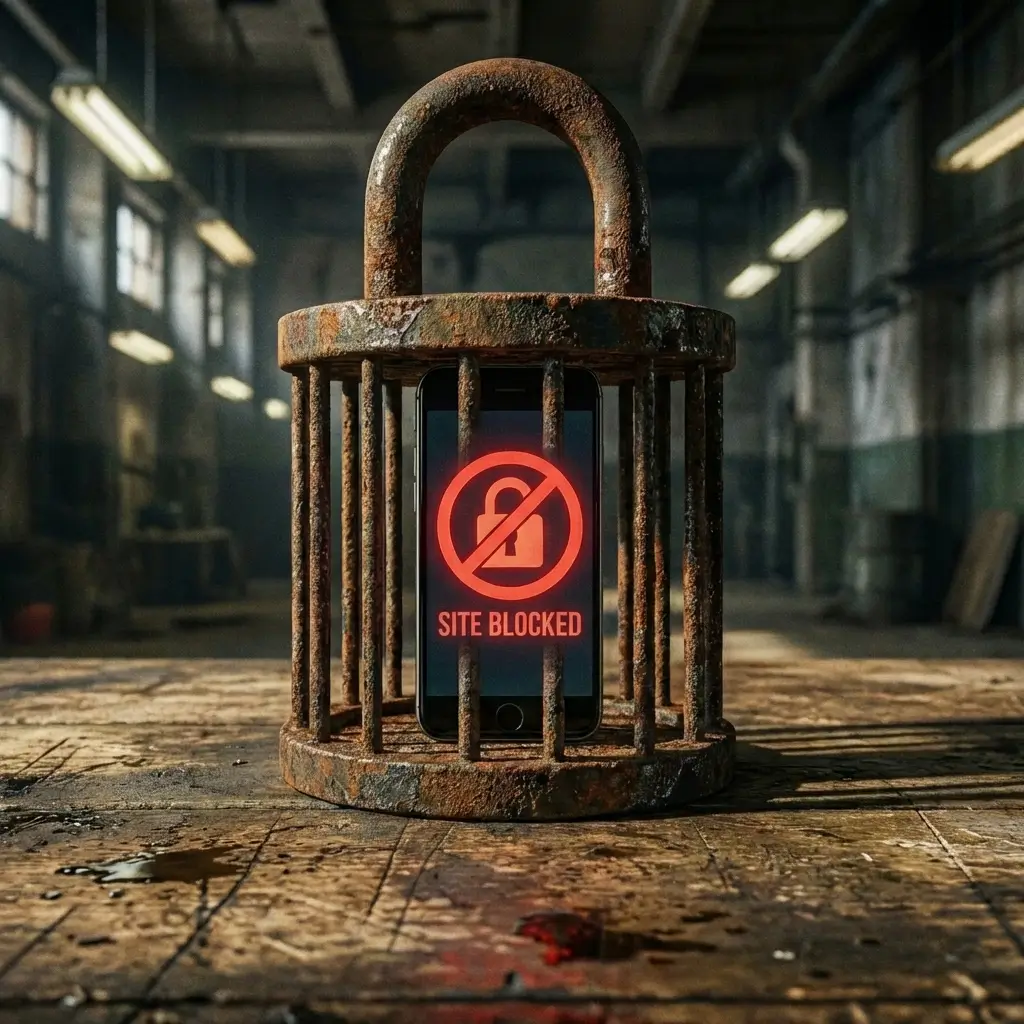
Self-exclusion is a voluntary, irrevocable ban that removes a person from all Class III tribal gaming facilities in Arizona, as well as licensed sports betting and fantasy sports platforms. Time periods are available in one-year, five-year, and ten-year increments. Once submitted with a notarized form and a current color photo, it typically goes into effect the same day it is received.
It is not a punishment. It is a tool. And it is one of the more concrete, immediate tools available to someone who has decided they want to stop.
If you are looking for a step-by-step breakdown of how to actually complete the process in Arizona, we put together a downloadable guide to walk you through it. [Link to your downloadable sheet here.]
We also wrote at length about what self-exclusion does well, and where it fits in the bigger picture of recovery, in a previous post: The Lock, The Key, and The Door: Why Self-Exclusion Is Only Step One. If you have not read it, it pairs well with everything above.
The Door Is Open Wider Than Ever
Here is something we have noticed after years of working in gambling treatment: the decision to stop rarely arrives fully formed. It usually shows up as a feeling first. A heaviness after a loss. A moment of clarity at an inconvenient hour. A conversation with someone who finally said the thing out loud.
Campaigns like "Take Back the Game" matter because they meet people in those moments. Seeing a message that says "you can remove yourself from all of this, and here is how" can be the thing that moves a feeling into an action. It normalizes asking for help. It reduces the shame that keeps a lot of people stuck longer than they need to be. And in Arizona especially, where the path to self-exclusion has historically required more legwork than it should, making that path clearer is something worth celebrating.
At Prescott House, we work exclusively with men navigating gambling addiction, and we see firsthand how much courage it takes to decide that enough is enough. That decision looks different for everyone. For some men it comes after a financial crisis. For others it is quieter than that, just a private recognition that the relationship with gambling has taken something from them they want back.
Wherever that moment finds you, the tools to act on it are more accessible in Arizona right now than they have ever been. Self-exclusion is one of them. Treatment is another. The two work best together.
If you or someone you care about is ready to figure out what comes next, we are here for that conversation. Reach out to our team at [phone number] or visit [contact link] to learn more about the Prescott House gambling program.
📚 Sources & Further Reading
- Arizona Department of Gaming: Self-Exclusion Program — The official state portal to begin the self-exclusion process, access forms, and get answers to frequently asked questions.
- National Council on Problem Gambling (NCPG): A state-by-state list of help resources and self-exclusion programs.
- Gamblers Anonymous (GA): Find a local in-person meeting near you.
- Mayo Clinic: Medical information on the symptoms and causes of compulsive gambling.
Related Gambling Addiction Readings
- The Lock, The Key, and The Door: Why Self-Exclusion Is Only Step One — Our most-read piece on what self-exclusion does well, where its limits are, and what comes next. (Read more →) https://www.prescotthouse.com/blog/the-lock-the-key-and-the-door-why-self-exclusion-is-only-step-one
- Gambling Addiction Recovery — A full look at Prescott House’s approach to recovering from gambling addiction. (Read more →)
- The Link Between Gambling Addiction and Mental Health — Explores how gambling problems interact with anxiety, depression, and emotional distress. (Read more →)
- FAQs about Gambling Addiction — Answers key questions around symptoms, treatment, and aftercare. (Read more →)
- Gambling Addiction Treatment at Prescott House — Overview of the program and services. (Read more →)