Ask a man what he thinks sobriety is going to feel like and you will usually get some version of the same answer. Quieter. Smaller. Gray. He is not being dramatic. He has done the math on everything he is giving up and he cannot yet picture what replaces it.
That belief is one of the more dangerous things a person can carry out of treatment. It sits there quietly for weeks and then shows up on the first hard Saturday, when there is nothing scheduled and nobody watching, and it whispers that this was always going to be the deal. A man who has spent ninety days learning tools but never once had a genuinely good sober day has been handed a plan he does not believe in.

The addictions that keep men indoors
This matters more for some men than others, and it depends a lot on what brought them in.
Prescott House works primarily with men struggling with sexual compulsivity and pornography addiction, gambling addiction, and substance use, often several at once. Look at what the first two have in common. They happen alone. They happen indoors. They happen on a screen, at night, in a room with the door shut, and the whole architecture of them depends on nobody else being there.
A man can be deep into a gambling problem or a porn addiction for years while everyone around him thinks he is fine. There is no smell on his breath and no car in the ditch. What there is instead is a slow narrowing. He stops going out. He stops calling people back. He gets very good at being alone with a device, and the isolation is not a side effect of the addiction, it is the environment the addiction needs to survive.
So when a man like that arrives, the clinical work has to happen, and it does. But something else has to happen alongside it. He has to be put back in the world with other people, doing things, in daylight.
Why a trail works when a chair does not
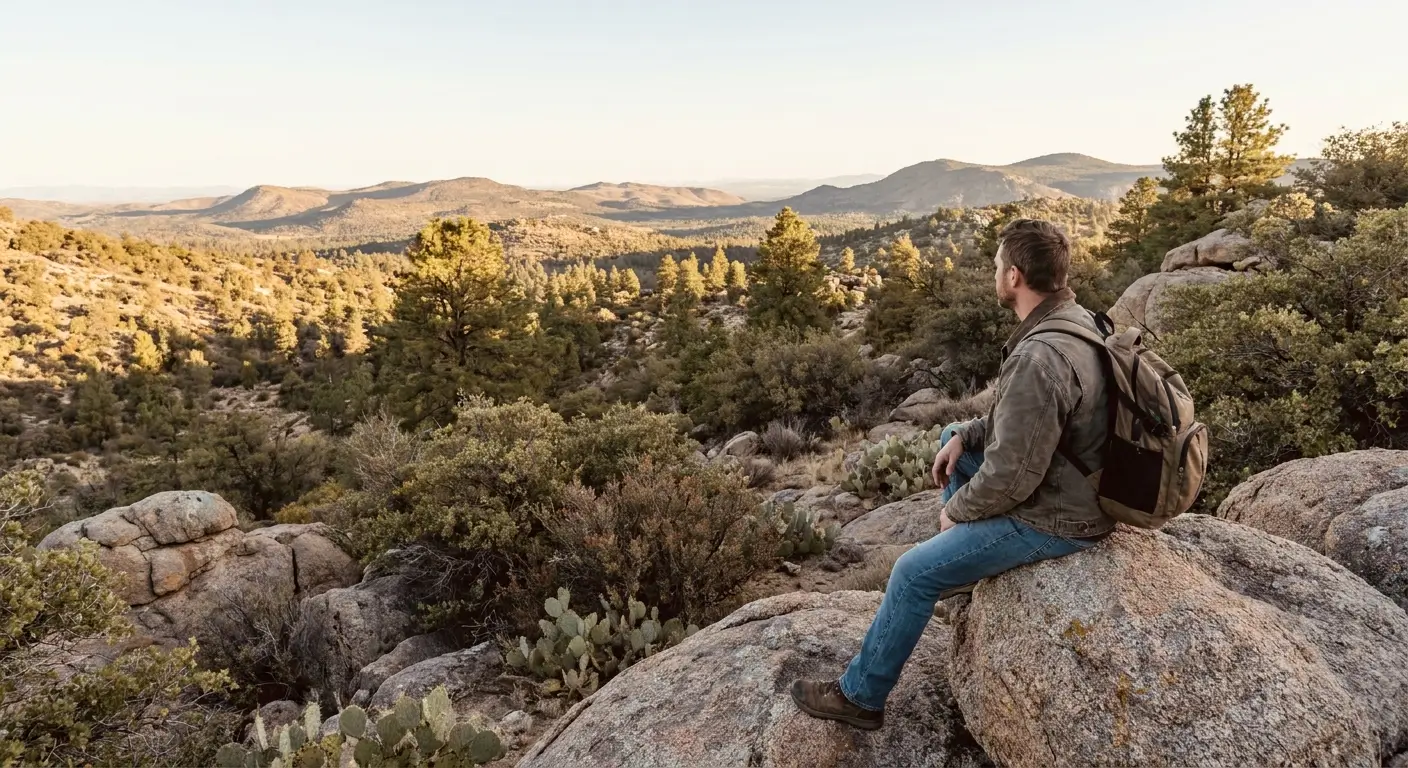
Anyone who has run groups for long enough has noticed this. Men who will not say a word sitting in a circle will tell you the truth walking up a hill.
Some of it is simple. Walking side by side removes eye contact, and eye contact is expensive when you are ashamed. Some of it is that a hike has something else to do besides talk, so the talking is optional, which is exactly what makes it possible. And some of it is that a man who is physically tired stops performing. The version of himself he has been maintaining takes energy, and after two hours uphill he does not have the energy to spare.
We are not making a clinical claim here. We are telling you what staff see, week after week. Some of the most honest conversations that happen at Prescott House do not happen in the building.

Proving the gray thing wrong
The other job is more direct. A man needs to find out, while he is still somewhere safe, that sober days can be good. Not inspiring. Good.
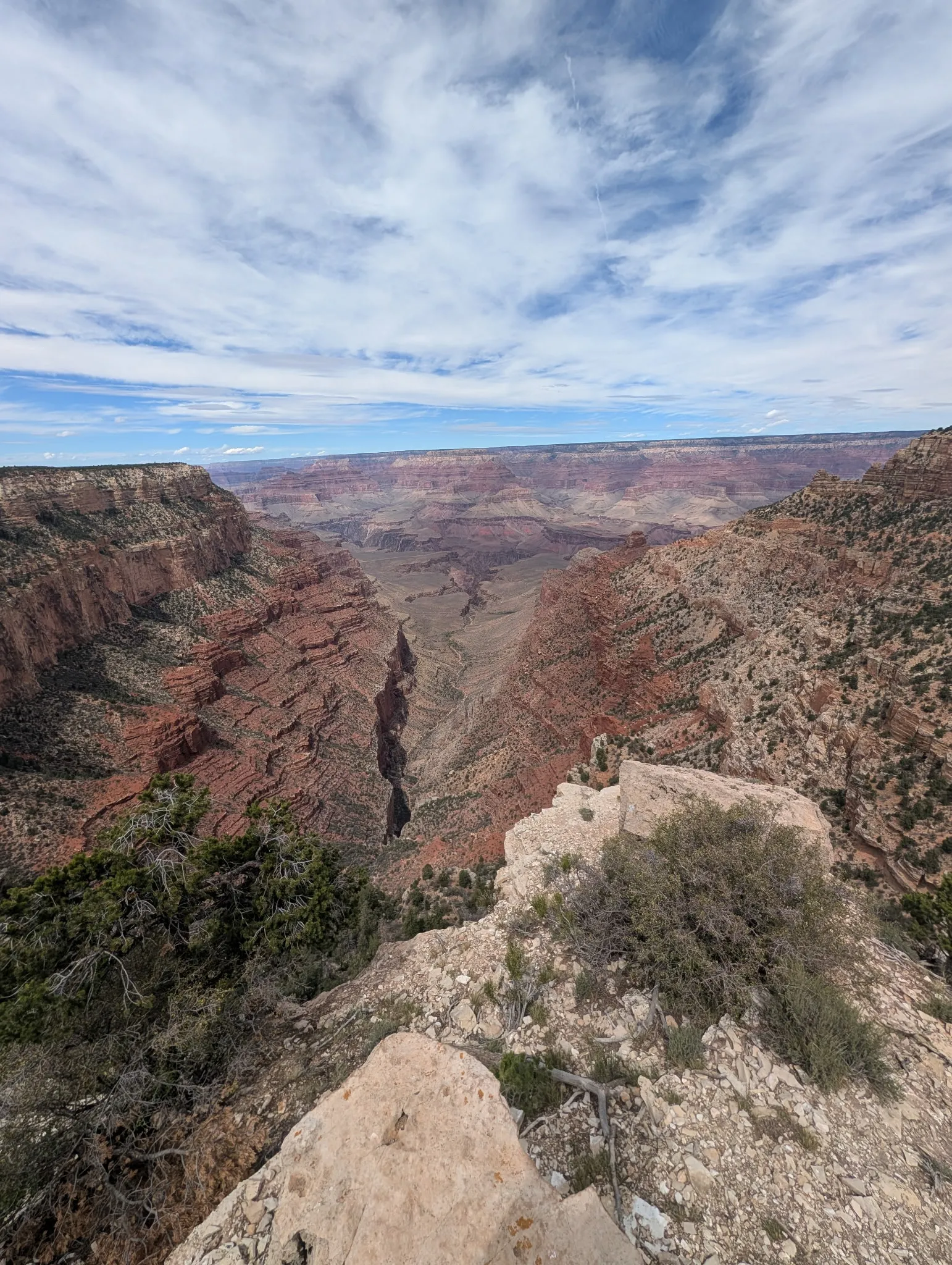
You cannot talk someone into this. You cannot hand him a worksheet about leisure activities and expect it to survive contact with a bad night. What works is accumulating actual evidence. A hike he finishes. A round of disc golf he loses badly. A steak cooked over a fire in the pines. A day at the Grand Canyon that costs two and a half hours of driving each way and turns out to be worth every minute of it.
None of those are treatment. All of them are proof. And the men who do well long term are, in our experience, the ones who figured out during treatment that they actually liked being sober, rather than the ones who merely agreed that they should be.
This is not wilderness therapy
Worth being clear, because families ask.
Prescott House is not a wilderness program. Nobody is dropped in the backcountry for a month to find himself. Men live in a house in town, keep a full clinical schedule, hold responsibilities, and go to meetings. Prescott just happens to sit a mile high with national forest on three sides, so the outdoors is ten minutes away rather than an expedition.
If you are looking at wilderness programs because you sense that your son or husband needs to get out of his room and back into his body, that instinct is a good one. It is also achievable inside a structured long-term program, without the whole thing being built around it. That middle ground is roughly where we sit.
What it actually looks like
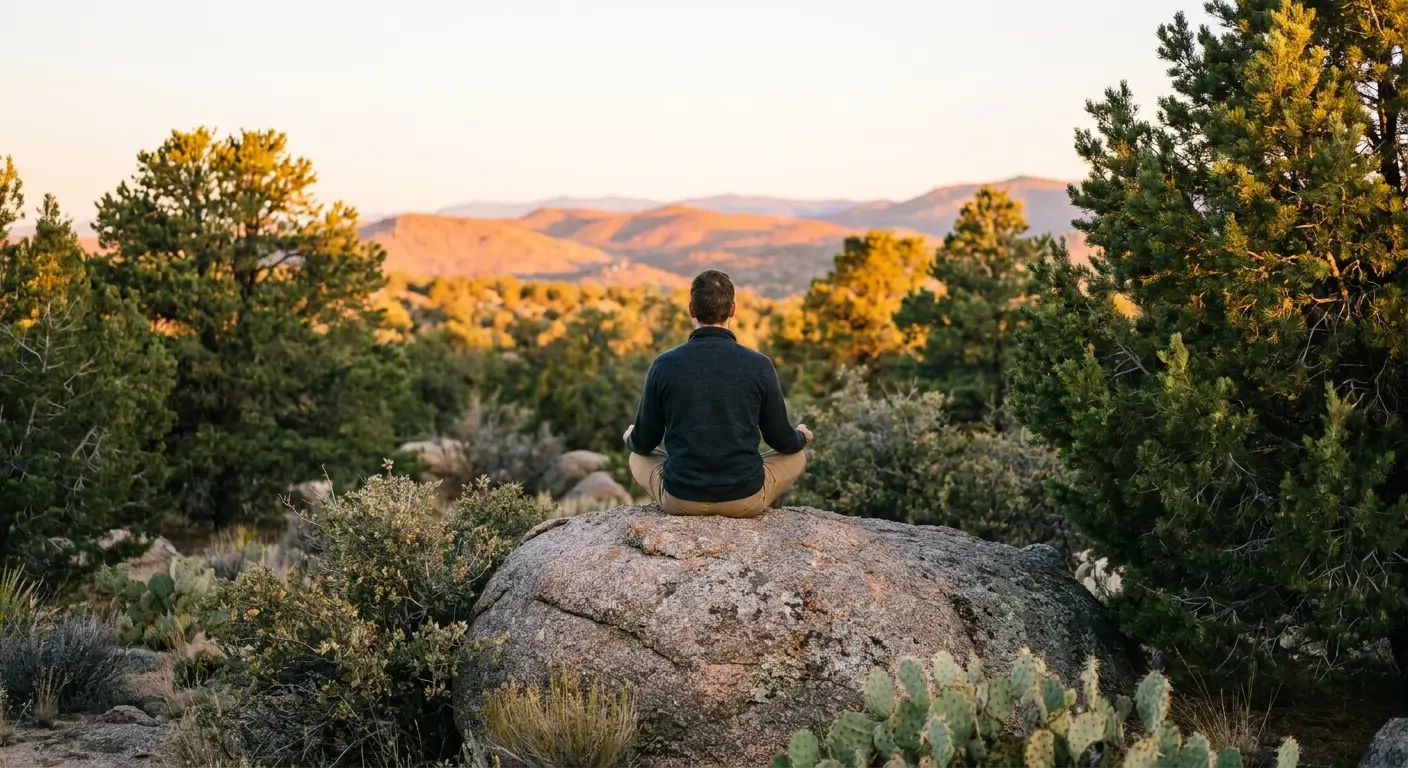
Hiking most weeks. Disc golf at Watson Lake. Kayaking when the weather cooperates. Yoga and fitness on a schedule for the men who want the structured version. Camping now and then, and once in a while something bigger like the canyon.
You can see the full picture, with photos, on our outdoor recreation page.
If you are trying to figure out whether this is the right place for someone, the admissions page walks through how it works, or you can call and talk to Jon or Steve directly.
Recovery that lasts takes time
Prescott House gives men 90 days or more, a recovery community, and a real practice run at life before they go home.
.webp)