I used to believe that if I could just get the substances out of my system, everything else would fall into place. That was the biggest misconception I brought with me into treatment over a decade ago: that addiction was the only problem I actually had.
My diet was terrible, my routine was chaotic, and my responsibilities were non-existent, but I told myself that was just a symptom. I'm just choosing to live and eat like crap because I'm an addict, I thought. I can fix that whenever I want to.
I learned the hard way that it doesn't work like that.
I had been to my fair share of standard 30-day rehabs. In those places, you wake up, someone cooks your meals, someone cleans up, and you go to group. You might start to feel better, but then your 30 days are up. You are suddenly dropped back into the real world, expected to handle life all at once, and I was never truly ready for that shock to the system.
Here at Prescott House, things look a lot different. We use a long-term treatment model instead of the "luxury vacation" approach, because real life isn't a vacation. We focus on foundation over frills.
Doing the Work Every Single Day
One of the biggest wake-up calls I had as a client here was realizing I had to actually do life. Not waking up and having someone cook for me was huge. Having to plan meals, buy groceries, and cook for myself wasn't just a chore; it was a reality check. It taught me that recovery is about showing up for the mundane, everyday responsibilities, even when you don't feel like it.
The Power of the Gradual Step-Down
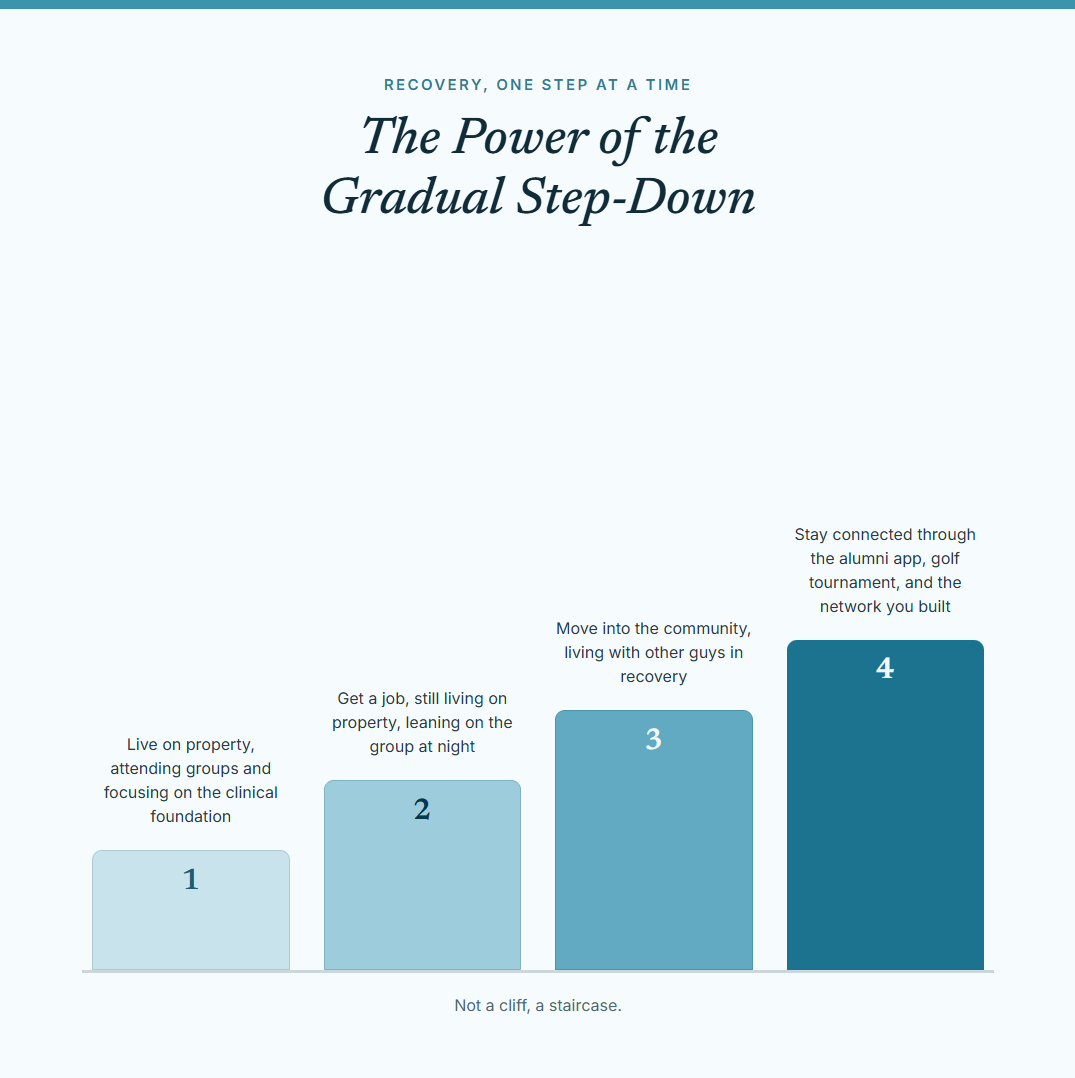
Change is hard, and trying to change everything all at once usually leads to a relapse. What saved my life was the gradual progression we use here. It's not a cliff you get pushed off; it's a staircase.
- Phase 1: I lived on the property, attending groups and focusing purely on my clinical foundation.
- Phase 2: I got a job and started working while still living on property, leaning on the group at night to process the stress of re-entering the workforce.
- Phase 3: I moved out into the community, but lived with other guys in recovery, building my independence.
- Phase 4: Even after "leaving," I didn't just disappear. I came back once a week for six months for a Men's Group.
Moving at Someone Else's Pace
I'll be honest: there were times I wasn't happy. I wanted to rush, and I thought I was ready for the next step before I actually was. But I was guided by a clinical team who knew better, and I was held back when I needed to be held back. Accepting that guidance instead of fighting it was exactly what I needed to build a lasting foundation.
Building the Net Before You Jump
A huge mistake people make is waiting until after treatment to find a community. Because I was at Prescott House long-term, I built my community while I was in treatment. I went to the same local 12-step meetings, found my sponsor, and established my roots here. When I finally fully transitioned out, my support system didn't change. It was already there.
The Payoff
Today, I have over a decade of recovery. I have a wife who is also in recovery, two amazing kids, and a life I actually want to be present for. Getting here was not easy, but thank God it wasn't. Because I learned how to do the hard things back then, I can handle so much more today.
I don't take any of it for granted. Not the ordinary Tuesday nights, not the groceries I buy for my own family now, none of it.
If you or your loved one is looking for a quick fix or a 30-day vacation, this isn't the place. But if you are ready to do the work, learn how to live again, and build a foundation that can hold up a real life, we're here to help you take that first step.
Keep Reading
- Long-Term Addiction Treatment. The model behind everything in this post: gradual step-down, real accountability, and why longer treatment tends to hold when shorter programs don't.
- More Than Willpower: A Whole-Person Approach to Addiction Recovery. The whole-person model behind treatment at Prescott House, and how mindfulness, therapy, and community work together.
- Treating the Trauma Underneath Addiction. Why the deeper issues underneath addiction take longer than 30 days to reach, and why that's the whole point of a long-term model.